How to Diagnose and Fix a Banging Pipe in Your Detroit Home
Dealing with loud banging pipes in your Detroit home? Learn what causes water hammer, how it affects your plumbing system, and practical steps to quiet the noise.

NEED A PLUMBER?
Fast & Local Plumbing Services
Leaks • Clogged Drains • Burst Pipes • Water Heaters • Emergency Plumbing
NEED A PLUMBER?
Fast & Local Plumbing Services
Leaks • Clogged Drains • Burst Pipes • Water Heaters • Emergency Plumbing
Few sounds are quite as startling in a quiet house as a sudden, loud bang echoing through the walls every time a faucet is shut off or the washing machine stops filling. Often referred to by plumbers as water hammer, this phenomenon is more than just an annoyance. Over time, the violent shockwaves traveling through your plumbing system can loosen fittings, stress pipe joints, and eventually lead to leaks or burst lines. If you are hearing loud noises when water valves snap shut in your Detroit home, understanding the root cause is the first step toward protecting your property.
What Causes Banging Pipes (Water Hammer)?
To understand water hammer, it helps to look at the physics of moving water. Water flowing through your supply lines has momentum. When you quickly close a valve—such as a solenoid valve on a modern washing machine or a quick-closing lever faucet—that moving water instantly hits a brick wall. Because water cannot be compressed, the shockwave bounces backward through the piping network, causing the physical pipes to rattle against wood framing, joists, or metal hangers.
In many older homes throughout Detroit's historic neighborhoods, plumbing systems were built with air chambers—short vertical segments of pipe installed near fixtures meant to trap a cushion of air. Over years of use, these air chambers often become waterlogged, filling entirely with water and losing their cushioning ability. Without that cushion, the hydraulic shock goes unchecked, resulting in that distinct hammering sound.
Other Common Sources of Plumbing Noise
While true water hammer happens when valves shut rapidly, other structural issues can cause similar banging or rattling sounds:
- Loose Pipe Straps: As hot water runs through supply lines, the metal pipes expand. If they are strapped too tightly or too loosely against joists, they can shift and strike structural framing.
- High Water Pressure: Municipal water pressure coming into homes can sometimes be excessively high. When pressure exceeds 80 psi, any sudden closure of a valve creates a much more violent reaction throughout the system.
- Faulty Pressure Reducing Valve (PRV): If your home is equipped with a PRV and it fails, water pressure can spike uncontrollably, intensifying pipe movement and noise.
Practical Steps to Assess and Quiet Noisy Pipes
Quieting a banging pipe requires identifying whether the issue is localized to a single appliance or affects your entire home supply system. Here is how homeowners typically approach troubleshooting:
1. Check Water Pressure
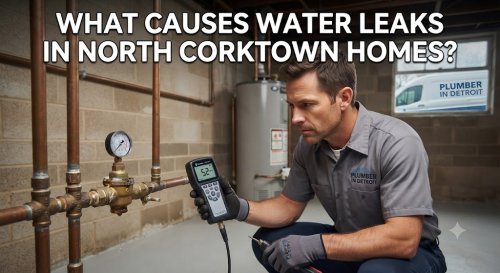
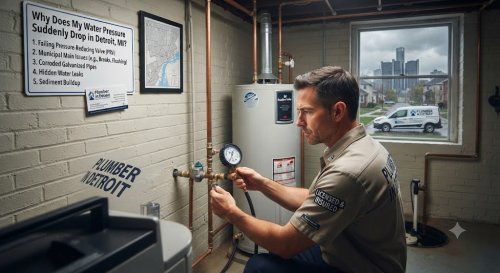
Attach a simple pressure gauge to an outdoor hose bib or a laundry sink faucet. If the reading is significantly above 75 or 80 psi, your home may need a properly adjusted or replaced pressure reducing valve to tame the overall force moving through your pipes.
2. Drain the Waterlogged Air Chambers
If your older Detroit property has traditional air chambers that have filled with water, you can often reset them manually:
- Shut off the main water supply to the house.
- Open the highest and lowest faucets in your home to completely drain the plumbing lines.
- Close all the faucets and turn the main water supply back on slowly.
- This process allows air to re-trap itself in the dedicated chambers, restoring the cushion.
3. Install Mechanical Water Arrestors
If draining air chambers only provides a temporary fix, modern plumbing solutions offer a permanent fix. Plumbers frequently install mechanical water arrestors—sealed units containing a piston and an air cushion—directly onto supply lines near high-demand fixtures like washing machines and dishwashers.
4. Secure Loose Piping
Inspect accessible pipes in your basement, crawlspace, or utility room. If you notice pipes vibrating or rubbing against joists when water turns on and off, adding cushioned pipe clamps or insulation can isolate the vibration and stop the physical banging.
Protecting Your Detroit Home's Plumbing Infrastructure
Ignoring a persistent water hammer invites long-term damage. Constant mechanical shock weakens solder joints, stresses threaded connections, and can eventually cause pinhole leaks behind finished walls. Taking the time to evaluate water pressure, secure loose lines, and restore air cushions helps preserve the integrity of your entire home plumbing system for years to come.