Introduction: Protecting Your East Village Home from Sewer Disasters
East Village, Detroit, is a neighborhood defined by its historic character, beautiful residential streets, and growing community along the riverfront. Residents here value the unique architecture and the quiet charm of the area. However, beneath the surface of these historic homes lies an essential infrastructure that homeowners often overlook until disaster strikes: the main sewer line.
A failing sewer line is not merely a plumbing inconvenience; it is a major health hazard and a threat to the structural integrity of your property. When a sewer line breaks, collapses, or becomes severely clogged, raw sewage can back up into your basement, create unsanitary conditions on your property, and cause significant, costly damage.
In a neighborhood like East Village, where many homes date back decades, aging clay or cast-iron pipes are susceptible to issues like tree root intrusion and ground shifting. When you experience a sewer emergency—such as multiple drains backing up simultaneously, a foul sewage odor, or wastewater pooling in your yard—you need an immediate, professional response.
At Plumber in Detroit, located conveniently near Woodward Avenue, we understand the urgency of these situations. We are dedicated to providing rapid, reliable emergency sewer line repair in East Village, utilizing the latest technology to minimize disruption to your historic property while ensuring a long-lasting solution.
What Is Sewer Line Repair?
Sewer line repair involves diagnosing and fixing the underground pipe responsible for carrying all wastewater from your home (toilets, sinks, showers, washing machines) to the municipal sewer main typically located under the street.
In the past, repairing a sewer line almost always meant excavating the entire length of the damaged pipe, destroying lawns, driveways, and landscaping in the process. Today, professional plumbing services offer advanced options, including traditional excavation and minimally invasive trenchless repair methods, depending on the nature and location of the damage.
Professional sewer repair addresses critical issues such as:
-
Cracked or Collapsed Pipes: Caused by ground shifting, aging materials, or heavy construction nearby.
-
Severe Blockages: Buildup of grease, debris, or non-flushable items that cannot be cleared with standard snaking.
-
Major Root Intrusion: Tree roots growing into pipe joints, causing significant structural damage.
-
Bellied Pipes: Sections of the pipe that have sunk due to soil conditions, causing waste to pool and create persistent clogs.
Why Does This Plumbing Problem Happen?
Sewer lines are durable, but they are not indestructible. Several common factors contribute to sewer line failures in East Village and throughout Detroit:
Aging Infrastructure
Many homes in East Village were built in the early- to mid-20th century. The original sewer lines are often made of clay, Orangeburg, or cast iron. These materials have a finite lifespan and naturally degrade, corrode, or become brittle over time, leading to cracks and eventual failure.
Tree Root Intrusion
This is perhaps the most common cause of sewer line damage in established neighborhoods with mature trees. Tree roots are naturally drawn to sources of water and nutrients. Even tiny cracks or loose joints in aging sewer pipes allow moisture to escape. Roots infiltrate these openings, growing inside the pipe and expanding, which eventually crushes the pipe or creates a major blockage.
Ground Shifting and Freezing
Detroit’s freeze-thaw cycles cause the ground to shift and expand, putting immense pressure on underground pipes. This movement can cause rigid pipes to crack, joints to separate, or sections of the pipe to offset (misalign).
FOG Buildup (Fats, Oils, and Grease)
While homeowners in East Village are generally conscientious, the cumulative effect of pouring fats, oils, and grease (FOG) down kitchen drains is detrimental. FOG cools and solidifies inside the sewer line, creating a thick, stubborn blockage that restricts flow and traps other debris.
Flushing Improper Items
The increased use of "flushable" wipes has led to a surge in sewer line failures. Unlike toilet paper, these wipes do not disintegrate. They get caught on imperfections in older pipes and combine with grease to form massive clogs known as "fatbergs," which completely block the line.
Signs You Should Never Ignore
Your sewer line usually provides clear warning signs before a total collapse occurs. Ignoring these signs is dangerous and can lead to expensive emergency repairs.
-
Multiple Slow Drains: If your sinks, bathtubs, and toilets are all draining slowly at the same time, the problem is likely not with individual fixtures but with the main sewer line.
-
Gurgling Toilets: Hearing a bubbling or gurgling sound from your toilet when you run water in the sink or when the washing machine drains indicates trapped air trying to escape past a blockage in the main line.
-
Sewage Odors: The smell of raw sewage in your basement, yard, or near drains is a definite sign of a leak or backup in the sewer system.
-
Wastewater Backup: This is an emergency. If wastewater backs up through a basement floor drain, or if flushing a toilet causes water to rise in a shower or bathtub, your sewer line is severely compromised.
-
Unusually Lush Patches of Grass: A specific section of your lawn that is significantly greener or grows faster than the surrounding area can indicate a leak in the underground sewer line, which acts as fertilizer for the grass.
-
Pest Infestations: Cracks and leaks in sewer lines attract rodents and insects looking for food and water. An unexplained increase in pests in or around your home can sometimes be traced back to sewer issues.
Common Plumbing Problems Related to This Issue
A main sewer line failure impacts the entire plumbing ecosystem of your home, leading to related issues:
-
Basement Flooding: The most immediate and damaging consequence of a main line blockage.
-
Drain Flies and Rodents: Attracted to the sewage and moisture escaping from damaged pipes.
-
Structural Damage: Persistent leaks can undermine your home's foundation and cause soil erosion around the property.
-
Contaminated Soil: Leaking sewage contaminates the soil surrounding your home, posing a health risk to your family and pets.
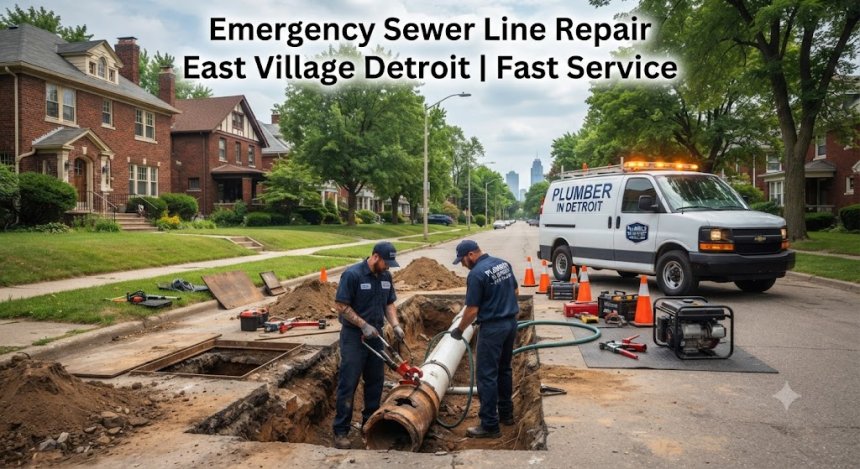
Step-by-Step Professional Repair Process
When you call Plumber in Detroit for emergency sewer line repair, our licensed professionals follow a structured, efficient process to restore your service safely.
Step 1: Emergency Assessment and Inspection
Our technician arrives promptly and uses specialized sewer cameras to inspect the interior of your pipe. This essential diagnostic step locates the exact location and cause of the blockage or damage without guesswork.
Step 2: Honest Diagnosis and Estimate
We review the camera footage with you, explain the problem clearly, and provide an upfront, transparent estimate for the repair options, whether it’s a spot repair, trenchless solution, or full replacement.
Step 3: Preparation and Safety
We obtain necessary permits from the City of Detroit, locate underground utilities, and ensure the worksite is safe for both our crew and your property.
Step 4: The Repair Execution
Our team employs the agreed-upon repair method.
-
Trenchless Repair (Pipe Lining or Bursting): For many situations, we can repair or replace the pipe without digging up your yard. A new liner is pulled through the old pipe and hardened, or the old pipe is burst while a new one is pulled in its place.
-
Traditional Excavation: For severely collapsed pipes or those requiring immediate replacement, we carefully excavate the area, replace the damaged section with new PVC pipe, and ensure proper slope and connection.
Step 5: System Testing
Once the repair is complete, we run water through the system and perform a final camera inspection to ensure the new pipe is intact and flowing correctly.
Step 6: Site Restoration and Cleanup
If excavation was necessary, we backfill the trench, compact the soil, and restore the area as closely as possible to its original condition. We haul away all debris, leaving your property clean.
Step 7: Preventive Maintenance Advice
Our plumber will offer advice on how to prevent future issues, such as scheduling routine hydro-jetting or avoiding certain disposal habits.
Can You Fix It Yourself?
Attempting a DIY repair on a main sewer line is strongly advised against. This is not a standard plumbing task like unclogging a toilet.
What Homeowners Can Safely Do: Homeowners can only safely plunge a single, localized toilet or sink clog. You can also ensure your main sewer cleanout access is clear of debris and accessible for professionals.
When DIY Becomes Dangerous and Ineffective:
-
Chemical Cleaners: Pouring harsh chemical drain cleaners into a blocked main line is dangerous. The chemicals sit in the pipe, creating toxic fumes and burning hazards for the plumber who eventually has to open the line. Furthermore, chemicals cannot clear tree roots or structural collapses.
-
Renting Heavy Equipment: Renting a commercial-grade sewer auger without experience can be disastrous. The powerful machine can twist violently, causing injury, or it can get hopelessly stuck in the line, turning a repair into a catastrophe.
-
Health Hazards: Exposure to raw sewage carries significant health risks, including E. coli and Hepatitis A. Professionals have the protective gear and training to handle contaminated materials safely.
Tools Professionals Use
Professional plumbers rely on heavy-duty, specialized equipment to diagnose and repair sewer lines efficiently:
-
Sewer Cameras: High-resolution, waterproof cameras on flexible rods that allow technicians to view the inside of pipes in real-time.
-
Locators: Devices used in conjunction with sewer cameras to pinpoint the exact depth and location of the problem from above ground.
-
Hydro Jetters: Powerful machines that use high-pressure water (up to 4,000 PSI) to blast through stubborn clogs, cut tree roots, and scour pipe walls clean.
-
Trenchless Equipment: Specialized pulling machines, bursting heads, and epoxy resin materials used for no-dig repairs.
-
Excavation Machinery: Compact excavators and backhoes used when traditional digging is unavoidable.
How Long Does the Repair Usually Take?
The timeline for sewer line repair depends on the method and complexity of the job.
-
Emergency Assessment: Diagnosis typically takes 1 to 2 hours.
-
Trenchless Repair: Often completed in 1 to 2 days, with minimal disruption.
-
Traditional Excavation: Can take 2 to 4 days, depending on the depth of the line, soil conditions, and the extent of the replacement required.
-
Emergency Response: Our team is on standby 24/7 to respond immediately to your East Village emergency.
Cost Factors
Ethical plumbing companies do not provide flat rates for sewer repairs over the phone because every situation is unique. The cost depends on several tangible factors:
-
The Severity and Location of the Damage: A small root intrusion near the cleanout is cheaper to fix than a collapsed pipe under a street or deep beneath a basement floor.
-
The Repair Method: Trenchless repair is often more cost-effective when considering landscaping restoration, but upfront equipment costs differ from traditional digging.
-
Accessibility: Pipes under finished basements, concrete slabs, or large trees are more difficult to access, increasing labor costs.
-
Permits and Inspections: Required City of Detroit permits and inspections add to the total cost.
-
Length of Pipe Repaired: The more pipe that needs replacement, the higher the material and labor costs.
Plumbing repair costs vary depending on the severity of the problem, accessibility, materials required, emergency service, property type, and local labor rates.
Hidden Truths Homeowners Should Know
Understanding these practical realities of the plumbing industry can save you money and stress:
-
Small Leaks Become Expensive Repairs: A small, undetected sewer leak saturates the soil, eventually leading to sinkholes, foundation cracks, and basement flooding.
-
Cheap Temporary Fixes Fail: RootX or chemical treatments only offer short-term relief for severe root intrusion; the roots will always grow back stronger.
-
Insurance Dislikes Neglect: Homeowners' insurance typically covers sudden sewer failures (like a burst pipe) but denies claims resulting from long-term neglect (like old pipes that were known to be failing).
-
Tree Roots Always Return: If you do not mechanically remove or line the pipe, roots will re-infiltrate a cleared pipe within months.
-
Hard Water Shortens Pipe Lifespan: Minerals in Detroit's water accelerate corrosion in older pipes.
-
DIY Mistakes Increase Costs: Attempting to clear a main line with a rental auger often results in the cable breaking inside the pipe, tripling the repair cost for the professional who has to retrieve it.
-
Delaying Repairs Causes Structural Damage: Constant sewage leaks weaken the soil beneath your home, leading to costly structural settling.
-
Hidden Leaks Increase Utility Bills: A significant underground sewer leak can lead to unusually high water usage, even if the leak isn't "fresh" water.
-
Mold Develops Quickly: Sewage backups create a prime environment for toxic mold to grow in as little as 48 hours.
-
Annual Maintenance Saves Money: Scheduling a professional camera inspection and preventative hydro-jetting every few years is vastly cheaper than an emergency excavation.
15 Common Mistakes Homeowners Make
Avoid these everyday errors to protect your home's sewer line:
-
Ignoring Slow Drains: Assuming they will fix themselves until they become a total blockage.
-
Using Chemical Drain Cleaners: Destroying older pipes and creating hazards for plumbers.
-
Flushing Wipes: Even those labeled "flushable" create massive blockages in aging sewer systems.
-
Pouring Grease Down Drains: Solidifying grease is a primary cause of kitchen line failures.
-
Planting Large Trees Near Sewer Lines: Positioning thirsty trees directly over the sewer lateral.
-
Hiring Unlicensed Handymen: Allowing unpermitted, substandard work that violates code.
-
Skipping Camera Inspections: Buying a historic home without scoping the sewer line first is a gamble.
-
Delaying Emergency Calls: Waiting until the weekend or morning to call when sewage is already flooding the basement.
-
Mixing Incompatible Pipe Materials: Improperly connecting PVC to old clay or cast iron.
-
Over-Tightening Cleanout Plugs: Cracking the access point and allowing sewer gas to leak.
-
Failing to Locate Cleanouts: Burying the access point under landscaping or decks, making emergency access difficult.
-
Overloading Garbage Disposals: Flushing excessive food waste that strains the main line.
-
Ignoring Musty Smells: Overlooking the first sign of a slow, hidden sewer leak.
-
Not Knowing Main Shut-Off Locations: Essential for any household plumbing emergency, including severe sewer backups.
-
Failing to Install a Backwater Valve: In areas prone to backups, failing to install this protective device is a risk.
Maintenance Tips
Proactive maintenance is the best way to avoid emergency sewer line repairs in East Village:
-
Schedule Annual Camera Inspections: Have a professional inspect your sewer line every 1 to 2 years, especially in older homes.
-
Use Enzymatic Cleaners: Flush bio-enzymatic drain cleaners monthly to safely break down organic buildup.
-
Practice Smart Disposal: Never flush wipes, hygiene products, or pour grease down the drain.
-
Manage Landscaping: Be mindful of where you plant trees and shrubs; consult a professional about root barriers.
-
Install a Backwater Valve: Consider installing this device to prevent municipal sewer backups from entering your home.
-
Keep Cleanouts Accessible: Ensure your main sewer cleanout is always visible and accessible for emergencies.
-
Educate Your Household: Make sure everyone in the home knows what can and cannot be flushed or put down the drain.
-
Repair Minor Leaks Promptly: Address small leaks in toilets and faucets to reduce the overall water volume entering your sewer system.
-
Consider Hydro-Jetting: Schedule preventive hydro-jetting every 3 to 5 years to clear buildup and roots before they cause a blockage.
-
Know Your Local Plumber: Keep the contact information for Plumber in Detroit readily available for any emergency.
When Should You Call an Emergency Plumber?
Call an emergency plumber immediately if you experience any of the following:
-
Active sewage backup into your home.
-
Multiple toilets and drains are completely clogged and will not drain.
-
Foul sewage odors that are pervasive and worsening.
-
Wastewater pooling in your yard, especially near the sewer line path.
-
Any situation where raw sewage is exposed, posing a health risk to your family.
Do not wait until normal business hours for these critical issues. Immediate action is necessary to prevent extensive property damage and health hazards.
Frequently Asked Questions (FAQs)
Here are answers to real search queries from homeowners in the Detroit area:
Why is my water pressure suddenly low?
Sudden low water pressure across multiple fixtures is often caused by a blockage in the main water line or a failing pressure-reducing valve, though sometimes it relates to a large sewer backup affecting drainage. A professional diagnostic is needed.
How much does leak detection cost?
Leak detection costs vary based on the complexity and location, typically ranging from $250 to $500+ for advanced electronic detection. However, this investment prevents unnecessary excavation and property damage.
Can a clogged drain damage pipes?
Yes. Severe clogs create high pressure inside pipes and trap corrosive waste against pipe walls, which can lead to cracks, joint failures, and bursts over time.
Is hydro jetting safe for old pipes?
An experienced plumber must perform a camera inspection first to assess pipe integrity. For structurally sound cast iron or clay lines, hydro jetting is safe and highly effective. For deteriorated Orangeburg or severely cracked pipes, trenchless lining or replacement may be necessary.
How do I know if my sewer line is broken?
Key indicators include slow drains throughout the house, gurgling toilets, sewage smells