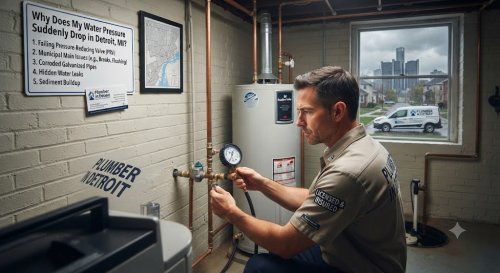
How to Deal With Tree Roots Intrusion in Detroit Sewer Lines
Learn how tree roots infiltrate sewer lines in Detroit homes, spot the early warning signs of blockages, and discover professional repair methods.
NEED A PLUMBER?
Fast & Local Plumbing Services
Leaks • Clogged Drains • Burst Pipes • Water Heaters • Emergency Plumbing
NEED A PLUMBER?
Fast & Local Plumbing Services
Leaks • Clogged Drains • Burst Pipes • Water Heaters • Emergency Plumbing
Understanding Tree Root Intrusion in Detroit Sewer Systems
Tree roots are naturally attracted to the moisture, nutrients, and warmth found inside underground sewer pipes. In older Detroit neighborhoods featuring mature maples, oaks, and elms, underground root systems often spread extensively across residential properties. When tiny cracks, loose joints, or minor structural flaws develop in older clay or cast-iron sewer lateral pipes, water vapor escapes into the surrounding soil. Tree roots sense this moisture gradient, grow directly toward the source, and force their way through microscopic openings.
Once inside a Detroit sewer line, tree roots find an endless supply of nourishment. They rapidly multiply, forming thick, hair-like mats that catch grease, tissue paper, and household debris. Over time, this buildup chokes the interior diameter of the pipe, severely restricting wastewater flow and causing major backups inside the home.
Warning Signs of Roots in Your Main Sewer Line
Catching a root intrusion early can save property owners from catastrophic sewage backups and expensive structural remediation. Homeowners and landlords throughout Detroit should watch for these distinct plumbing symptoms:
- Multiple Slow Drains: If sinks, showers, and tubs throughout the house drain sluggishly at the same time, the blockage is typically located in the main sewer line rather than an individual branch drain.
- Gurgling Toilet Bowls: When you flush a toilet or run a washing machine and hear bubbling or gurgling sounds from other plumbing fixtures, trapped air is escaping the system due to a downstream obstruction.
- Sewage Odors: Unpleasant sewer gas smells lingering in basements, crawlspaces, or around yard areas often indicate a compromised or blocked sewer pipe.
- Unexpected Lawn Soft Spots: If a section of your yard near the sewer line path remains unusually soggy, sunken, or exhibits unusually lush, green grass during dry spells, wastewater may be leaking underground.
Diagnostic Methods Used by Detroit Plumbers
Professional plumbers do not guess when dealing with underground sewer lines. Accurate diagnosis relies on advanced technology to locate the exact depth, distance, and severity of the root infiltration:
- CCTV Sewer Camera Inspection: A high-definition, waterproof camera is pushed through a cleanout directly into the sewer lateral. This allows the plumber to visually inspect the pipe interior, identify root masses, evaluate pipe material (such as aging clay, Orangeburg, or cast iron), and check for structural cracks or collapses.
- Electronic Line Locating: If the camera reveals a damaged section requiring excavation or spot repair, a sonde transmitter on the camera head emits a radio frequency. The technician uses an above-ground receiver to pinpoint the exact location and depth on the lawn or driveway.
Effective Solutions for Root-Infested Sewer Pipes
Depending on the extent of the root damage and the structural integrity of the pipe, several professional remediation techniques are commonly utilized in Detroit:
Mechanical Root Cutting and Hydro Jetting
For pipes that remain structurally sound, specialized mechanical augers equipped with rotating cutting blades are used to slice through and shred root masses. Following mechanical cutting, high-pressure hydro jetting scours the interior pipe walls clean, removing remaining root fibers, scale, and stubborn sludge. While effective, this is typically a maintenance procedure rather than a permanent fix, as roots will eventually regrow if the pipe remains cracked.
Chemical Root Treatments
Specialized foaming root killer herbicides can be applied down the plumbing system. These formulas kill roots inside the pipe and inhibit future growth without harming the actual shade tree on the property. These treatments work best as preventative maintenance after a thorough physical cleaning.
Trenchless Pipe Lining
When roots repeatedly invade a pipe through multiple cracks or deteriorated joints, trenchless pipe lining (CIPP) offers a modern solution. A flexible, resin-saturated liner is pulled or blown into the damaged sewer pipe and inflated. The resin cures in place, creating a seamless, root-proof structural pipe within the old host pipe without requiring major excavation of landscaping or concrete.
Traditional Excavation and Spot Repair
In cases where the sewer pipe has completely collapsed, sagged (belly), or been severely crushed by aggressive root growth and soil shifting, traditional excavation is necessary. The damaged pipe section is physically dug up and replaced with modern durable PVC piping.
Preventative Strategies for Property Owners
Minimizing future sewer line trouble requires proactive property management. Consider these practical preventative steps for your Detroit home or commercial property:
- Schedule routine camera inspections if your property features large, mature trees planted close to the lateral sewer line path.
- Avoid planting water-hungry trees with aggressive root systems, such as willows, poplars, or large maples, directly over or near underground utility lines.
- Use approved root-inhibiting treatments periodically if your system has a history of minor root intrusion.
- Address minor slow drains promptly before a small root mass hardens into a total blockage.
Frequently Asked Questions
How long does it take for tree roots to completely clog a sewer pipe?
The timeline varies depending on the tree species, soil conditions, and the size of the initial opening in the pipe. In some cases, roots can grow from a tiny hairline crack to a dense, blocking mass in a matter of months, while in others, the process takes several years.
Does homeowners insurance cover sewer line damage caused by tree roots?
Standard Detroit homeowners insurance policies typically do not cover damage caused by tree roots, as they classify it as a maintenance issue or normal wear and tear. However, some policies offer optional endorsement riders specifically for underground water and sewer service lines.
Can I clear tree roots from my main sewer line using chemical drain cleaners from the store?
Standard chemical drain cleaners found in retail stores are generally ineffective against thick tree root masses and can damage aging or delicate plumbing pipes due to their caustic nature. Mechanical cutting or hydro jetting by a professional is necessary for severe obstructions.
Is trenchless sewer repair suitable for all Detroit homes?
Trenchless methods are highly versatile and work for many residential applications, but they require a structurally continuous pipe path. If a pipe has suffered a total structural collapse or severe belly sag, traditional excavation is often the only viable solution.