"Why Does My Detroit Home Smell Like Sewer Gas? Causes",
Discover why your Detroit home smells like sewer gas. Learn common causes like dry P-traps, broken vent stacks, warning signs, and when to call a plumber.

NEED A PLUMBER?
Fast & Local Plumbing Services
Leaks • Clogged Drains • Burst Pipes • Water Heaters • Emergency Plumbing
NEED A PLUMBER?
Fast & Local Plumbing Services
Leaks • Clogged Drains • Burst Pipes • Water Heaters • Emergency Plumbing
Why Does My Detroit Home Smell Like Sewer Gas? Causes & Solutions
Introduction
Catching a sudden whiff of rotten eggs or sulfur in your living space is more than just unpleasant—it is a major red flag. When a residential or commercial property begins to smell like sewage, it creates immediate worry for homeowners. Property owners across Detroit, MI, from historic neighborhoods like Corktown and Boston-Edison to modern builds throughout Wayne County, frequently search for answers when foul odors infiltrate their indoor air.
Local properties face distinct challenges, including aging municipal infrastructure, shifting soil, and harsh seasonal shifts that dry out plumbing traps. Understanding why your Detroit home smells like sewer gas, recognizing the associated health warnings, and knowing when to call a professional ensures your living environment stays safe, comfortable, and fresh.
What Is a Sewer Gas Odor?
A sewer gas odor is the unmistakable scent of decomposing organic waste, hydrogen sulfide, and methane escaping from your home’s plumbing drainage network into living spaces.
Common Situations
-
Dry Floor Drains: Infrequently used basement or utility room drains where the water trap has evaporated, letting sewer air flow freely into the room.
-
Damaged Wax Rings: A deteriorating toilet base seal that allows sewer gases to seep out every time the fixture is flushed.
-
Vented Roof Blockages: Leaves, snow, or ice blocking exterior plumbing vent stacks, forcing sewer gases back down through sink and tub traps.
Symptoms & Triggers
Triggers often include prolonged dry weather spells, high indoor heating that accelerates trap evaporation, or structural pipe cracking. Symptoms range from a faint, intermittent sulfur smell near a bathroom sink to a persistent, heavy sewage stench filling the entire basement.
Why Does This Plumbing Problem Happen?
Sewer gas odors rarely occur without a specific mechanical failure or maintenance oversight in the DWV (Drain, Waste, and Vent) system. The primary reasons include:
-
Dried-Out P-Traps: Every plumbing fixture features a curved section of pipe called a P-trap designed to hold a small amount of standing water. This water acts as an airtight barrier blocking sewer gas. In rarely used Detroit basement utility drains, this water quickly evaporates.
-
Cracked or Corroded Vent Stacks: Exterior roof vent pipes equalize air pressure in your plumbing system. When these cast-iron or PVC pipes crack or become blocked by debris, gases escape into attic spaces or walls.
-
Broken Wax Rings and Floor Seals: The seal beneath a toilet prevents sewer gas from leaking past the floor flange. When toilets shift due to rotted subfloors, the seal breaks.
-
Aging Cast-Iron Pipes: Older homes in Detroit often feature corroded, porous cast-iron sewer lines that develop micro-cracks, allowing sewer odors to seep into wall cavities.
Practical Example: In a historic home in Woodbridge, a guest bathroom shower that goes unused for months loses its P-trap water seal, allowing sewer gas to fill the upper floor whenever the home's heating system runs.
Signs You Should Never Ignore
Recognizing warning signs early can protect your family from toxic gas exposure and structural damage:
-
Persistent Rotten Egg Odors: The signature smell of hydrogen sulfide lingering near drains, basements, or crawlspaces.
-
Gurgling Drains: Toilets or sinks that make a gurgling sound when other fixtures drain, indicating trapped air and venting issues.
-
Slow Draining Fixtures: Sluggish water evacuation pointing to partial blockages that disrupt trap pressure balances.
-
Damp Walls or Ceiling Stains: Moisture trails near plumbing vent paths suggesting hidden pipe leaks or condensation.
-
Unexplained Headaches or Nausea: Prolonged low-level exposure to sewer gases can cause physical discomfort for household occupants.
Why each sign matters: Ignoring a minor sewer smell can expose your household to harmful sewer gases, which contain methane and bacteria that threaten indoor air quality and health.
Common Plumbing Problems Related to This Issue
Sewer gas odors frequently coincide with or point to other hidden plumbing system failures:
-
Drain Clogs: Accumulated hair, grease, and soap scum trapping air pockets and blocking proper venting.
-
Sewer Backups: Main line blockages forcing raw sewage gases and foul air backward through household traps.
-
Pipe Leaks: Corroded or separated waste pipes leaking greywater and noxious vapors into enclosed subfloors.
-
Broken Sewer Lines: External tree root intrusion or soil shifting cracking underground waste lines outside the foundation.
Step-by-Step Professional Repair Process
When you call a licensed plumbing team in Detroit to investigate persistent sewer smells, they follow a rigorous diagnostic workflow:
-
Step 1: Inspection: The plumber conducts a walkthrough of all fixtures, floor drains, and utility spaces to map out where the odor is strongest.
-
Step 2: Diagnosis: Utilizing specialized tools like smoke testing equipment or electronic sewer cameras to locate hidden pipe cracks or dry traps.
-
Step 3: Estimate: Presenting a transparent, written quote outlining the exact repair or replacement required to seal the plumbing system.
-
Step 4: Repair: Executing the corrective action, whether it is replacing a toilet wax ring, clearing a vent stack, or repairing a damaged waste pipe.
-
Step 5: Testing: Running water through all fixtures and verifying air pressure stability to ensure zero gas leakage.
-
Step 6: Cleanup: Clearing away work debris, sanitizing affected fixture areas, and leaving your home pristine.
-
Step 7: Maintenance Advice: Offering personalized guidance on how to maintain water traps and prevent future odor issues.
Can You Fix It Yourself?
Homeowners can tackle basic preventive steps, but structural plumbing repairs require certified expertise.
-
Safe DIY Solutions:
-
Pouring Water into Drains: Pouring a cup of water down rarely used basement floor drains and utility sinks to refill evaporated P-traps.
-
Cleaning Drain Stoppages: Removing surface hair and organic gunk from sink stoppers and drain assemblies.
-
-
Temporary Fixes:
-
Covering unused shower or floor drains with rubber drain mats temporarily while awaiting professional diagnosis.
-
-
When DIY Becomes Dangerous:
-
Climbing Roofs: Attempting to clear frozen or debris-clogged exterior roof vent stacks during icy Detroit winters creates severe slip and fall hazards.
-
Altering DWV Systems: Incorrectly modifying vent pipes or drain slopes can worsen sewer gas venting failures.
-
-
When Professional Plumbing is Necessary:
-
Persistent sewer smells that do not resolve after refilling floor drain traps.
-
Cracked cast-iron waste stacks or leaking main sewer lines beneath concrete slabs.
-
Tools Professionals Use
Licensed plumbers rely on specialized diagnostic equipment to trace and eliminate invisible sewer gas leaks:
-
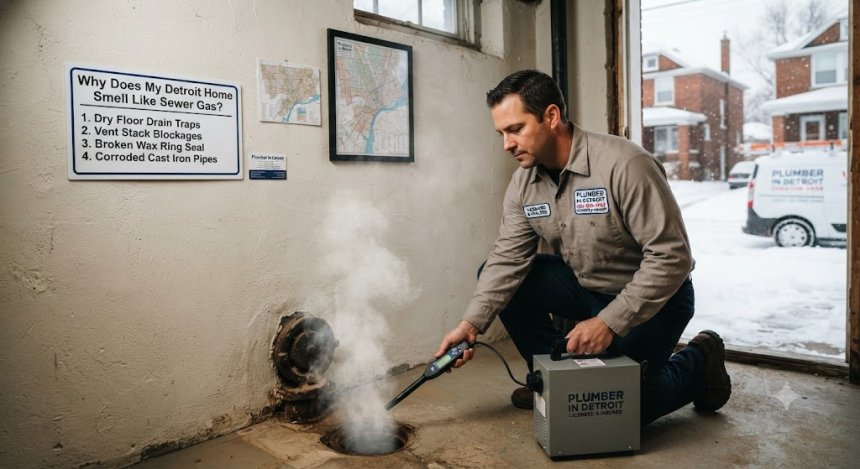
Smoke Testing Machines: Equipment that blows non-toxic, visible smoke into the plumbing system to expose hidden cracks and unsealed vent leaks instantly.
-
Drain Inspection Cameras: Waterproof fiber-optic scopes used to examine the interior of waste and sewer lines.
-
Electronic Gas Detectors: Sensitive meters designed to detect trace amounts of hazardous sewer gases and methane.
-
Pipe Wrenches & Extractor Tools: Professional-grade hardware required for safe fixture removal and flange repairs.
-
Plumbing Smoke Generators: Specialized blowers used for precision leak mapping in complex building structures.
How Long Does the Repair Usually Take?
Repair timelines vary depending on the root cause of the odor:
-
Refilling Traps or Clearing Simple Blockages: 30 to 60 minutes.
-
Replacing a Toilet Wax Ring or Drain Gasket: 1 to 2 hours.
-
Clearing Roof Vent Stacks or Repairing Visible Waste Pipes: 2 to 4 hours.
-
Major Vent Stack or Underground Sewer Line Repairs: 1 to 3 days.
Factors affecting repair time: Accessibility of the affected pipes, height and pitch of roof vent stacks, and the overall condition of older home infrastructure.
Cost Factors
Providing a single fixed price for sewer odor repairs is impossible because every property configuration is unique. Costs are influenced by:
-
Diagnostic Fees: Standard service call rates to troubleshoot and locate the source of invisible gas leaks.
-
Parts and Materials: Cost of new wax rings, replacement P-trap assemblies, or PVC venting sections.
-
Labor Complexity: Time required to access hard-to-reach pipes inside walls, crawlspaces, or multi-story roofs.
-
Emergency Service Surcharges: After-hours dispatch fees for urgent weekend or night calls.
-
Excavation Needs: If underground sewer lines outside the foundation require repair.
Plumbing repair costs vary depending on the severity of the problem, accessibility, materials required, emergency service, property type, and local labor rates.
Hidden Truths Homeowners Should Know
-
Sewer Gas Is Toxic: Prolonged exposure to hydrogen sulfide found in sewer gas causes headaches, dizziness, and respiratory irritation.
-
Not All Odors Are Plumbing: While most smells stem from dry traps or broken seals, persistent gas odors can occasionally point to natural gas line leaks, which require immediate emergency response.
-
Old Vent Pipes Fail Silently: Decades-old cast-iron vent stacks in historic Detroit homes frequently rust out inside walls without any visible water leaks.
-
Floor Drains Dry Fast: Dry basement air during winter heating seasons evaporates P-trap water in weeks, causing sudden mysterious odors.
-
Masking Sprays Do Not Fix It: Air fresheners only mask symptoms while letting harmful sewer gases continue to leak into your home.
15 Common Mistakes Homeowners Make
-
Ignoring Faint Odors: Dismissing intermittent sulfur smells as temporary nuisances.
-
Relying Solely on Air Fresheners: Masking toxic sewer gas instead of fixing the root plumbing cause.
-
Forgetting Basement Floor Drains: Failing to pour water into infrequently used utility drains.
-
Using Harsh Chemical Cleaners: Pouring corrosive acids down drains that damage older cast-iron pipes.
-
Flushing Non-Wipes Down Toilets: Creating major clogs that disrupt proper DWV venting.
-
Hiring Unlicensed Handymen: Risking improper flange seals and unsealed vent connections.
-
Skipping Annual Plumbing Inspections: Missing early signs of corroding waste stacks.
-
Waiting Until Health Symptoms Occurs: Delaying service until family members experience nausea or headaches.
-
Over-Tightening Toilet Bolts: Cracking porcelain toilet bases while attempting to stop rocking or leaks.
-
Neglecting Roof Vent Maintenance: Ignoring leaves, snow, and ice blocking exterior vent openings.
-
Improperly Venting DIY Additions: Tying new bathroom fixtures into existing vent lines without proper calculations.
-
Leaving Cleanout Plugs Loose: Forgetting to tighten basement sewer cleanout access caps securely.
-
Using Incorrect Pipe Materials: Mixing incompatible materials that accelerate joint corrosion.
-
Ignoring Gurgling Fixtures: Failing to connect gurgling sounds to underlying venting blockages.
-
Choosing Contractors Based Solely on Price: Risking incomplete diagnostics and recurring odors.
Maintenance Tips
Keep your home smelling fresh and prevent sewer gas leaks with these practical maintenance tips:
-
Refill Floor Drains Regularly: Pour water down basement and utility room floor drains every few months.
-
Inspect Toilet Wax Rings: Check toilet bases periodically for rocking or moisture seepage.
-
Keep Roof Vents Clear: Inspect exterior roof vent stacks seasonally for leaves, bird nests, or ice blockages.
-
Clean Sink P-Traps: Remove and clean debris from bathroom and kitchen P-traps annually.
-
Run Water in Guest Bathrooms: Flush toilets and run faucets in seldom-used guest rooms weekly.
-
Schedule Annual Plumbing Tune-Ups: Have a licensed plumber inspect your DWV system every year.
-
Never Flush Wipes: Dispose of paper towels, wipes, and hygiene products in the trash, never the toilet.
-
Monitor for Gurgling Sounds: Pay attention to bubbling drains indicating venting restrictions.
-
Secure Cleanout Caps: Ensure all basement sewer cleanout plugs are tightly sealed.
-
Check Washing Machine Standpipes: Ensure laundry drain standpipes have functioning P-traps and proper height.
-
Install Mesh Vent Covers: Prevent debris and wildlife from entering exterior roof vent pipes.
-
Avoid Harsh Acids: Use mechanical augers or enzymatic cleaners for routine clog maintenance.
-
Inspect Crawlspace Plumbing: Routinely check under-floor waste pipes for separation or cracks.
-
Maintain Sump Pump Pits: Ensure sump pump basin covers are airtight to block pit odors.
-
Know Your Local Plumber: Keep a trusted Detroit plumbing contact saved for rapid assistance.
When Should You Call an Emergency Plumber?
Call an emergency plumbing team immediately if you encounter any of the following situations:
-
Overwhelming Sewage Odors: Heavy, nauseating gas smells filling the entire home that cause physical illness.
-
Combined Gas and Plumbing Concerns: Smelling sulfur or rotten eggs while unsure whether it is sewer gas or a natural gas leak.
-
Severe Sewage Backups: Raw wastewater flooding basement floor drains alongside foul odors.
-
Major Drainage Failures: Multiple toilets and sinks completely backing up simultaneously.
Why immediate action is important: Prompt professional intervention eliminates toxic gas exposure, protects family health, and stops hazardous environmental contamination in your living space.
Frequently Asked Questions
Why is my water pressure suddenly low?
Sudden low water pressure is typically caused by clogged faucet aerators, a failing pressure-reducing valve (PRV), or mineral scale buildup in supply lines rather than venting issues.
How much does leak detection cost?
Leak detection costs vary based on property size and equipment required, serving as a diagnostic fee prior to executing targeted plumbing repairs.
Can a clogged drain damage pipes?
Yes, persistent clogs create high internal pressure and prolonged chemical exposure that can weaken pipe walls and joints over time.
Is hydro jetting safe for old pipes?
Hydro jetting is highly effective, but an experienced plumber must first inspect historic clay or cast-iron pipes via camera to ensure structural integrity.
How do I know if my sewer line is broken?
Key indicators include multiple slow drains, gurgling toilets, foul sewage odors, wet spots in the yard, and backups in basement floor drains.
How long do water heaters last?
Traditional tank water heaters typically last between 8 to 12 years, while tankless units can operate for 20 years or more with routine maintenance.
Why does my faucet drip?
A dripping faucet is usually caused by a worn washer, degraded O-ring, or a failing internal valve cartridge inside the handle.
What causes pipes to burst?
Pipes most commonly burst when trapped water freezes and expands during harsh winter freezes, or when extreme internal pressure builds up from blockages.
Can plumbing leaks increase my water bill?
Yes, even a small, hidden supply leak can waste hundreds of gallons a day, leading to a shocking spike in your monthly utility bill.
When should I replace plumbing instead of repairing it?
If your home features widespread pipe corrosion, frequent recurring leaks, or outdated materials like galvanized steel, full replacement or repiping is more cost-effective than continuous patch repairs.
Why Choose Our Plumbing Company
When you are facing persistent sewer gas odors or plumbing emergencies in Detroit, MI, you need a local team you can depend on. Here is why homeowners and businesses choose Plumber in Detroit:
-
Experienced Licensed Plumbers: Our team consists of licensed, insured professionals with extensive hands-on experience handling Detroit's unique historical and modern plumbing infrastructure.
-
Honest Recommendations: We provide transparent, upfront estimates with zero hidden fees, advising you honestly on the most effective repair solutions.
-
Fast Response Times: We know that foul odors disrupt your daily life instantly, which is why we prioritize prompt dispatch.
-
Emergency Availability: Plumbing emergencies don’t stick to a 9-to-5 schedule. We are available around the clock for 24/7 emergency service.
-
Modern Equipment: We invest in cutting-edge diagnostic tools like smoke testing and camera scopes to locate hidden gas leaks accurately.
-
Local Expertise: We understand Wayne County codes, local seasonal challenges, and neighborhood-specific plumbing needs across Detroit and surrounding communities.
Contact Plumber in Detroit today at