How to Deal with Tree Roots in Detroit Sewer Lines
Learn how tree roots invade Detroit sewer lines, the warning signs of a root intrusion, and professional methods used for Detroit sewer repair and clearing.

NEED A PLUMBER?
Fast & Local Plumbing Services
Leaks • Clogged Drains • Burst Pipes • Water Heaters • Emergency Plumbing
NEED A PLUMBER?
Fast & Local Plumbing Services
Leaks • Clogged Drains • Burst Pipes • Water Heaters • Emergency Plumbing
Understanding Tree Root Intrusion in Detroit Sewer Systems
Mature trees add incredible character and shade to historic neighborhoods across Detroit, from the grand American elms and maples in Palmer Park to the established oaks found throughout the older residential districts. However, those same sprawling root systems often seek out moisture and nutrients from underground utility infrastructure. When roots find tiny cracks or loose joints in residential sewer laterals, they infiltrate the pipe, expand, and eventually cause severe blockages or structural collapses.
As a Detroit plumber with two decades of local experience, clearing and repairing root-damaged sewer lines is one of the most common issues property owners face. Older homes built in the early-to-mid 20th century frequently feature clay, cast iron, or orangeburg sewer pipes. Over decades, ground shifting, soil settling, and natural wear create microscopic openings that invite root growth. Understanding how these intrusions happen helps homeowners catch problems before a complete sewer backup occurs.
Warning Signs That Roots Have Invaded Your Sewer Line
Tree roots rarely breach a pipe overnight. The process is gradual, which means your plumbing system usually gives warning signs long before a total blockage forms. Recognizing these indicators can save you from a messy and expensive emergency cleanup in your basement.
- Multiple Slow Drains: If your bathtub, sink, and toilet are all draining sluggishly at the same time, the restriction is usually located in the main sewer line rather than an individual branch drain.
- Gurgling Sounds: Hearing bubbling or gurgling noises from your toilet bowl when running the washing machine or sinking water usually indicates trapped air pushed through a blocked vent or a constricted sewer line.
- Frequent Toilet Clogs: Needing to plunge toilets repeatedly despite no obvious foreign object being flushed often points to restricted outgoing flow caused by a root mass.
- Soggy Patches in the Yard: If a specific area of your lawn remains unusually damp, lush, or sunken even weeks after rain, a broken sewer pipe may be leaking wastewater underground.
- Unpleasant Odors: Foul sewage odors lingering around floor drains in the basement or near your yard's cleanout indicate trapped or escaping wastewater gases.
Why Detroit Properties Are Uniquely Vulnerable
Detroit’s unique infrastructure and environment play a significant role in underground plumbing challenges. Many residential neighborhoods feature mature, deep-rooted shade trees planted decades ago in close proximity to lateral sewer lines running from the house to the municipal street main. Additionally, Detroit experiences extreme freeze-thaw cycles every winter. As the ground freezes deeply and then thaws rapidly in spring, the surrounding soil shifts dramatically. This seasonal movement puts immense stress on older sewer pipe materials, widening hairline cracks and allowing tree roots easier access to a continuous source of water and warmth.
Professional Methods for Diagnosing and Removing Roots
When dealing with a suspected root intrusion, guesswork can lead to wasted money and worsening pipe damage. Professional plumbing diagnostics ensure the problem is addressed correctly the first time.
Video Camera Inspections
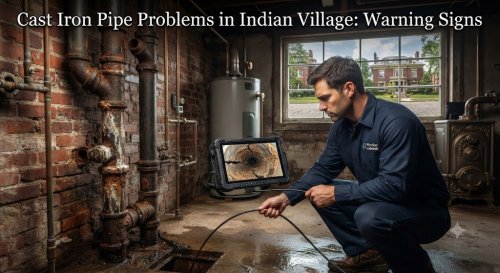
The most accurate way to confirm a root intrusion is through a sewer camera inspection. A specialized, waterproof high-definition camera is pushed down through the cleanout and navigated through the entire lateral line. This allows a plumber to see the exact location, density, and structural impact of the roots, as well as the overall condition of the pipe material.
Mechanical Root Cutting
For lines that are structurally sound but heavily choked by roots, professional mechanical augers equipped with specialized cutting blades are used to slice through and clear the root mass. These rotating blades pulverize the roots, which are then flushed out into the municipal main during Detroit drain cleaning procedures.
Hydro Jetting
High-pressure water jetting utilizes streams of water pressurized up to 4,000 PSI to scour the interior walls of the sewer pipe. This method not only cuts through roots but also strips away grease, scale, and remaining root fibers, leaving the pipe thoroughly cleaned and restoring maximum flow capacity.
Long-Term Solutions for Severely Damaged Pipes
If a camera inspection reveals that tree roots have completely crushed, offset, or fractured your sewer pipe, routine root cutting will only provide a temporary fix. In these cases, permanent solutions are required.
- Trenchless Pipe Lining: Often called cured-in-place pipe (CIPP) lining, this method involves inserting an epoxy-saturated resin tube into the damaged pipe and inflating it. Once cured, it forms a seamless, root-proof new pipe within the old one, minimizing disruption to your Detroit landscaping, driveway, or sidewalk.
- Traditional Pipe Replacement: For severely collapsed lines or pipes with major structural failures, excavating and replacing the compromised section of the lateral line remains the most dependable structural solution.
Prevention and Maintenance Strategies
While you cannot stop trees from growing, you can take proactive steps to protect your sewer system:
- Mind Your Planting Zones: Avoid planting large trees with aggressive root systems, such as willows, maples, or poplars, near where your underground sewer lateral runs.
- Schedule Routine Inspections: If you have large trees near your sewer line, schedule a preventive video camera inspection every few years to catch root entry before it blocks the line.
- Avoid Chemical Root Killers: Be cautious with harsh chemical foaming root killers sold in retail stores, as many of these chemicals can damage older metal or clay pipes and may harm your lawn's surrounding ecosystem. Rely on mechanical or hydro jetting maintenance instead.
Frequently Asked Questions About Tree Roots in Sewer Lines
Can a toilet backup caused by roots clear itself?
No. Tree roots inside a sewer line grow denser over time, trapping waste and toilet paper. Without mechanical cutting or hydro jetting, the blockage will progressively worsen until the line is completely sealed.
Will homeowners insurance cover sewer line root damage?
Standard homeowners insurance policies typically do not cover damage caused by wear, tear, or tree roots. However, some homeowners purchase supplemental service line endorsements that help offset repair costs. It is best to check directly with your insurance provider regarding your specific policy details.
How deep are Detroit sewer laterals buried?
In Detroit, residential sewer lines typically run between 4 and 8 feet deep to protect the infrastructure from freezing during harsh winter temperatures. The exact depth varies depending on the age of the home, slope requirements, and property grading.
How often should roots be cleared from a sewer line?
If your property has persistent root intrusion and you choose not to replace or line the pipe, professional root clearing is generally needed every 12 to 18 months to prevent unexpected backups.