Cast Iron Pipe Problems in Indian Village: Warning Signs
Discover the warning signs of failing cast iron pipes in historic Indian Village homes. Learn causes, repair costs, and when to call a Detroit plumber

NEED A PLUMBER?
Fast & Local Plumbing Services
Leaks • Clogged Drains • Burst Pipes • Water Heaters • Emergency Plumbing
NEED A PLUMBER?
Fast & Local Plumbing Services
Leaks • Clogged Drains • Burst Pipes • Water Heaters • Emergency Plumbing
Cast Iron Pipe Problems in Indian Village Homes: Warning Signs
Indian Village is one of Detroit’s most historic and architecturally significant neighborhoods. Walking along Burns, Iroquois, or Seminole Avenues feels like stepping back in time, surrounded by magnificent mansions and stately homes built in the early 20th century. However, owning a piece of history comes with responsibilities, particularly concerning the aging infrastructure hidden within these beautiful structures.
While the limestone facades and mahogany trim have likely stood the test of time, the same cannot always be said for the plumbing systems. Many homes in Indian Village were originally constructed with cast iron pipes for both water supply and, more critically, the main sewer (drain waste vent) lines.
After 80 to 100 years, these original cast iron pipes are reaching the end of their lifespan. Failure is inevitable, and the consequences of ignoring the warning signs can be disastrous, leading to sewage backups, extensive water damage, and incredibly costly repairs. As an experienced plumbing team serving historic Detroit neighborhoods, we believe every Indian Village homeowner needs to understand the risks associated with aging cast iron and how to spot trouble before it’s too late.
What Are Cast Iron Pipe Problems?
Cast iron pipe problems refer to the structural degradation of the plumbing system due to decades of use, corrosion, and environmental factors.
In the early 1900s, cast iron was the gold standard for durability. However, it is not immortal. Over decades, exposure to water, sewer gases, and waste causes internal oxidation—essentially, the pipe rusts from the inside out. This process is accelerated by the acidic nature of modern waste and household chemicals.
As the pipe corrodes, two main issues develop:
-
Internal Flaking and Scaling: The inside of the pipe becomes rough and narrow, restricting flow. This leads to chronic, recurring clogs.
-
Structural Failure: The pipe walls thin out, eventually cracking, collapsing, or developing holes. This allows sewage to leak underneath your home’s foundation or into the surrounding soil.
In historic homes around Detroit, Wayne County, and throughout the region, this is a ticking time bomb. A failure doesn't just mean a slow sink; it often means raw sewage contaminating your crawlspace or sub-slab living areas.
Why Does This Plumbing Problem Happen?
The primary cause of cast iron pipe failure is simply age combined with environmental stress. Plumbing systems, like roofs or furnaces, have a finite lifespan. For cast iron, this is generally considered 50 to 75 years, though many in Indian Village are pushing 100.
Specific contributing factors in historic homes include:
-
Corrosion and Oxidation: Constant exposure to water and waste causes rust. This rust creates thick, scaly buildup inside the pipe (called tuberculation), which reduces the diameter and catches debris. Eventually, the rust eats through the pipe wall completely.
-
Soil Movement: Detroit sits on clay-heavy soil, which expands and contracts significantly with moisture changes and freeze-thaw cycles. This earth movement puts immense pressure on brittle cast iron pipes buried underground, causing them to crack or shear.
-
Tree Root Intrusion: Indian Village is renowned for its mature, beautiful trees. Their roots, however, are invasive and relentlessly seek water sources. Once cast iron pipes develop even hairline cracks or loose joints at the fittings, roots will infiltrate the pipe, causing blockages and accelerating structural failure.
-
Chemical Drain Cleaners: Generations of homeowners have poured harsh chemical cleaners (like Drano or Liquid-Plumr) down slow drains. While these might offer a temporary fix for a clog, they chemically react with and rapidly corrode aging cast iron, significantly shortening its remaining lifespan.
Signs You Should Never Ignore
Because the main sewer line is typically buried beneath the basement floor or concrete slab, you rarely "see" the pipe itself until it's a major emergency. You must pay attention to the subtle clues the plumbing system gives you.
-
Slow Drains: If multiple fixtures (sinks, tubs, toilets) in the house are draining slowly, it usually indicates a blockage or significant narrowing in the main line leaving the house, often due to cast iron scaling.
-
Recurring Clogs: Are you constantly plunging toilets or calling a drain cleaner for the same bathtub? Persistent clogs that return quickly after clearing are a major red flag that the pipe's interior is failing.
-
Gurgling Drains: If your toilet gurgles when the washing machine drains, or a sink bubbles when the toilet is flushed, it’s a sign of improper venting or a blockage in the main line. Air is struggling to escape, forcing its way back through other fixture traps.
-
Foul Odors: A persistent sewage smell in your basement or crawlspace is a definitive warning sign. It means sewer gases are escaping through cracks or holes in the cast iron pipe.
-
Sewage Backups: The most severe sign. If raw sewage backs up into your basement floor drain, bathtub, or lowest toilet, the main sewer line is completely blocked or collapsed. This requires immediate emergency plumbing assistance.
-
Water Stains or Dampness on Basement Walls/Floor: If you notice unexplained moisture, wet spots, or persistent stains on your basement walls (near where pipes run) or the floor near a cleanout, it could indicate a leaking or weeping pipe within the wall or slab.
-
Foundation Cracks or Sinkholes: An undetected, long-term leak under the slab can wash away the soil supporting your home's foundation. This can lead to new structural cracks in the foundation or, in extreme cases, small sinkholes developing in the yard near the sewer line exit.
-
Pest Infestation: Rodents and insects are attracted to the moisture and odors emanating from cracked sewer lines. If you notice an unexplained influx of pests in the basement despite pest control efforts, it could be linked to compromised plumbing.
-
Discolored Water: If your tap water suddenly appears rusty or discolored, and you have older galvanized supply lines connected to or running alongside cast iron waste lines, it may indicate significant corrosion within the system.
-
Low Water Pressure: While usually related to supply lines, a sudden drop in overall water pressure can sometimes indicate a massive leak somewhere in the system that is depressurizing the incoming supply.
Common Plumbing Problems Related to This Issue
Failing cast iron pipes trigger a cascade of other plumbing and structural problems.
-
Sewer Backups: The most common and unsanitary result, flooding basements with greywater or raw sewage.
-
Water Damage and Mold: Leaks behind walls or under slabs saturate surrounding materials, creating a perfect breeding ground for toxic mold.
-
Structural Damage: Long-term leaks erode soil under footings and slabs, compromising the home's structural integrity.
-
Pest Infestation: As mentioned, compromised sewer lines invite unwanted wildlife.
-
Fixture Damage: Backups can overflow toilets and ruin expensive flooring, vanities, and basement finishes.
-
Burst Pipes: Weakened cast iron is more susceptible to freezing and bursting during severe Detroit winters if not properly insulated.
Step-by-Step Professional Repair Process
When a licensed plumber suspects cast iron failure in an Indian Village home, they use modern, non-invasive technology to confirm the diagnosis and propose solutions.
-
Step 1 Inspection: The process begins with a visual inspection of all accessible plumbing in the basement and crawlspace.
-
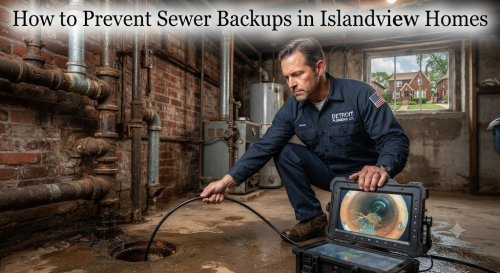
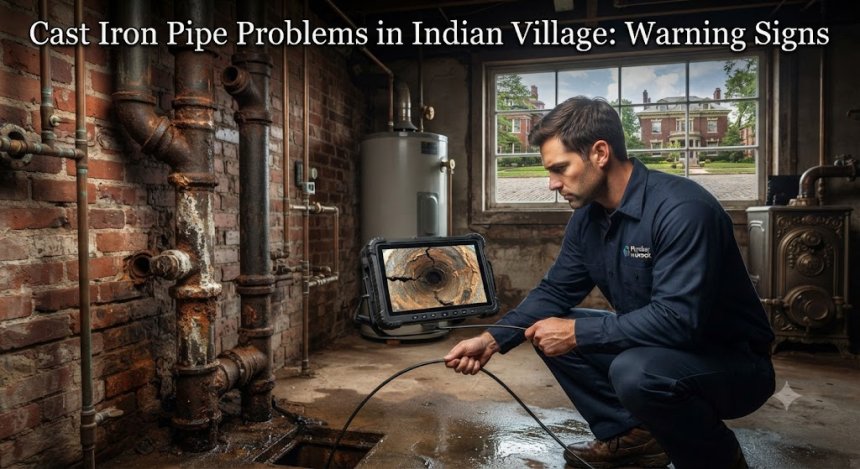
Step 2 Diagnosis (Sewer Camera Inspection): This is the critical step. A waterproof, high-resolution sewer camera is fed into the main cleanout. The plumber can visually examine the entire interior of the pipe, identifying cracks, severe scaling (buildup), root intrusion, and structural collapses. They can even locate exactly where the problem is located under the floor using a transmitter on the camera head.
-
Step 3 Estimate: Based on the camera footage, the plumber provides a detailed, transparent written estimate. In historic homes, this often involves two main options: spot repairs (if the damage is localized) or full sewer line replacement (if the entire system is compromised).
-
Step 4 Repair (Excavation vs. Trenchless):
-
Traditional Excavation: Involves breaking through the basement concrete slab to access and replace the failed pipe sections manually. This is disruptive, noisy, and requires concrete restoration.
-
Trenchless Sewer Replacement (Pipe Bursting): Often preferred for historic homes. A new, durable pipe is pulled through the existing damaged cast iron line, "bursting" the old pipe outward as the new one goes in. This requires only two small access points (pits), preserving the basement floor and foundation.
-
Step 5 Testing: After the new piping is installed, it undergoes rigorous pressure and flow testing to ensure no leaks and proper drainage.
-
Step 6 Cleanup and Restoration: The plumbing team removes all debris, sanitizes the work area, and restores concrete floors or landscaping.
-
Step 7 Maintenance Advice: The plumber provides guidance on protecting the new system, including avoiding harsh chemicals and scheduling periodic camera inspections.
Can You Fix It Yourself?
No. Absolutely not. Repairing or replacing main sewer lines, especially those running under the foundation of a historic home, is a complex task requiring specialized equipment, heavy machinery (like jackhammers or pneumatic pipe bursting tools), plumbing permits, and deep expertise in local building codes.
-
Safe DIY Solutions: Your only safe DIY option is preventative maintenance. Be mindful of what goes down the drain (no wipes, grease, or feminine products) and never use chemical drain cleaners on old pipes. If a drain is slow, use a plunger or a hand-cranked auger, but know when to stop.
-
When DIY Becomes Dangerous: Attempting to snake a main line can worsen a collapse or get equipment hopelessly stuck. Trying to dig under a foundation can cause catastrophic structural failure of your home.
-
When Professional Plumbing is Necessary: If you experience any of the warning signs listed above—especially recurring clogs, gurgling drains, or sewage odors—you require immediate professional intervention.
Tools Professionals Use
Licensed plumbers utilize advanced technology to diagnose and repair sewer lines without guesswork.
-
Sewer Inspection Cameras: High-definition cameras with lights and transmitters to view and locate problems inside pipes.
-
Electronic Pipe Locators: Receivers that pinpoint the exact location and depth of the sewer camera head underground.
-
High-Pressure Hydro Jetters: Machines that use intense water pressure to scour away years of scale buildup and stubborn blockages inside cast iron pipes (used with caution on very thin pipes).
-
Pipe Bursting Equipment: Specialized hydraulic tools used in trenchless replacement to pull a new pipe through the old, failed line.
-
Trench Shoring Equipment: Necessary safety gear to prevent trench collapse during traditional excavation.
How Long Does the Repair Usually Take?
The timeline varies greatly depending on the scope of work and the chosen method.
-
Simple Repairs: Clearing a localized clog or replacing a small, accessible section of pipe might take 4 to 8 hours.
-
Moderate Repairs: Replacing a main line in a crawlspace or a short run under a basement floor can take 1 to 3 days.
-
Major Repairs (Full Line Replacement): Replacing the entire main sewer line from the house to the street (often 50-100+ feet) using trenchless methods typically takes 2 to 4 days. Traditional excavation for the same job could take 1 to 2 weeks, involve heavy equipment, and cause significant disruption to your home and yard.
-
Emergency Repairs: Immediate action to stop a sewage flood and secure the area will happen within hours of your call, with permanent repairs following shortly after diagnosis.
Cost Factors
It is irresponsible for any plumber to quote a fixed price for sewer replacement over the phone without seeing the situation first. Costs are highly variable.
-
Diagnostic Fees: Usually a flat fee to cover the technician's time and the use of the sewer camera.
-
Accessibility: The biggest cost driver. How deep is the pipe? Is it under a finished basement floor, or an easily accessible crawlspace? Navigating historic basements with limited access adds labor hours.
-
Length of Pipe Replaced: Cost is typically calculated per linear foot.
-
Repair Method: Trenchless (pipe bursting) is often more expensive in materials but cheaper in labor and restoration costs compared to traditional excavation. However, traditional excavation might be cheaper for short, shallow runs.
-
Permits and Inspections: Required by the City of Detroit and adds to the overall cost.
-
Replacement vs. Spot Repair: Replacing the entire failing system is exponentially more expensive upfront than a small patch, but far more cost-effective in the long run, as one spot repair on 100-year-old pipe is often quickly followed by another failure nearby.
-
Emergency Service Charges: After-hours, weekend, or holiday calls command premium rates.
Practical Reality: While a spot repair might cost a few hundred to a few thousand dollars, a full main sewer line replacement for a historic home in Indian Village typically ranges from $10,000 to over $25,000, depending on all the factors above. This is a major investment, but essential to protect your home's value and habitability.
Hidden Truths Homeowners Should Know
Indian Village homeowners need to face some hard truths about their plumbing.
-
Small Leaks Become Expensive Repairs: A weeping joint under your slab will silently saturate the soil, potentially leading to foundation settling and cracking that costs far more to fix than the pipe itself.
-
Cheap Temporary Fixes Often Fail: Relying on hydro-jetting to clear heavily scaled cast iron pipes is often a temporary band-aid; the rough interior will catch debris again quickly, and the high pressure can sometimes burst a thinned-out pipe.
-
Insurance May Not Cover Neglected Plumbing: Standard homeowner policies cover sudden and accidental water damage (e.g., a washing machine hose bursts). They generally do not cover damage resulting from gradual wear and tear, corrosion, or neglected maintenance on 100-year-old pipes. If your cast iron fails and floods your basement due to age, you are likely paying for the cleanup and repairs out of pocket.
-
Hard Water Shortens Fixture Lifespan: Detroit's mineral-rich water contributes to scaling in waste lines and corrodes supply lines and fixture internals.
-
DIY Mistakes Increase Repair Costs: A DIY attempt that collapses a pipe or gets a snake stuck turns a routine replacement into a nightmare scenario.
-
Delaying Repairs Causes Structural Damage: Don't wait until a floor collapses or a wall is ruined by mold. Act at the first warning sign.
-
Annual Maintenance Saves Money: An annual sewer camera inspection can catch issues early, allowing you to budget for replacement rather than facing an emergency.
15 Common Mistakes Homeowners Make
-
Ignoring Slow Drains: Assuming it's "just an old house quirk" is the biggest mistake.
-
Using Chemical Drain Cleaners: Pouring corrosive acid on 100-year-old iron is a recipe for disaster.
-
Flushing Wipes (even "flushable"): They snag on rough cast iron and cause major blockages.
-
Pouring Grease Down Drains: It cools, solidifies on the scaled pipe, and creates a concrete-like clog.
-
Ignoring Water Pressure Problems: High pressure stresses aged joints and valves.
-
Hiring Unlicensed Handymen for Plumbing: Never use unqualified labor for complex, code-governed work.
-
Skipping Annual Maintenance: Waiting for a breakdown instead of preventing one.
-
Waiting Until Emergencies Strike: The worst time to find a plumber is when sewage is flooding your basement.
-
Using Wrong Pipe Materials: Mixing modern PVC with old cast iron improperly causes galvanic corrosion.
-
Over-Tightening Plumbing Fittings: Snapping old brass threads creates new leaks instantly.
-
Forgetting Main Shut-Off Locations: During an emergency, every second counts; know where your water shut-off is.
-
Neglecting Root Intrusion Early: Once roots are in, they only get worse; address cracked pipes immediately.
-
Ignoring Gurgling Sounds: It's the system telling you it can't breathe properly due to a clog or venting issue.
-
Disregarding Local Plumbing Codes: Bypassing permits creates liability and resale issues.
-
Skipping Post-Repair Inspections: Always verify the new work via camera before closing up floors.
Maintenance Tips
-
Camera Inspection Annually: Have a professional plumber run a sewer camera through your main line every year to monitor its condition.
-
Mind What Goes Down the Drain: Treat your sewer line with respect. Nothing but water, human waste, and toilet paper.
-
Install a Mainline Backwater Valve: This crucial device prevents municipal sewer backups from entering your home during heavy storms. Highly recommended for older Detroit homes.
-
Replace Old Supply Lines: If you are opening up walls or floors to replace waste lines, replace any remaining old galvanized water supply lines with modern copper or PEX at the same time.
-
Know Your Shut-Off: Clearly mark and ensure everyone in the home knows where the main water shut-off valve is.
-
Insulate Pipes: Ensure all exposed pipes in unheated areas (basements, crawlspaces) are properly insulated to prevent freezing.
-
Check Sump Pumps: Test your sump pump regularly, especially before spring rains and heavy usage times. Consider a battery backup.
-
Clean Gutters: Ensure downspouts direct water away from your home's foundation to reduce soil pressure on sewer lines.
-
Plant Wisely: Be conscious of tree placement near your sewer lateral.
-
Use Enzyme Cleaners: Monthly use of a bio-enzymatic drain cleaner can help break down organic buildup without harming pipes (use preventatively, not to clear existing clogs).
-
Water Softener Consideration: While hard water scales pipes, softened water can sometimes be more aggressive toward old metals; consult a local water treatment specialist familiar with Detroit water.
-
Address Drips Promptly: Fix minor faucet and toilet leaks to reduce the overall volume of wastewater flowing through your aged system.
-
Avoid Garbage Disposals: While convenient, disposals add significant organic load