How to Prevent Sewer Backups in Islandview Homes: Guide
Prevent costly sewer backups in your Islandview Detroit home. Learn causes, warning signs, prevention tips, and when to call a plumber.

NEED A PLUMBER?
Fast & Local Plumbing Services
Leaks • Clogged Drains • Burst Pipes • Water Heaters • Emergency Plumbing
NEED A PLUMBER?
Fast & Local Plumbing Services
Leaks • Clogged Drains • Burst Pipes • Water Heaters • Emergency Plumbing
How to Prevent Sewer Backups in Islandview Homes: A Complete Guide for Detroit Residents
Living in the historic and revitalizing neighborhood of Islandview on Detroit's east side means enjoying a unique blend of classic architecture, growing community spaces, and proximity to downtown. However, many homes in Islandview date back to the early 20th century, meaning they rely on aging infrastructure, particularly when it comes to the main sewer lines connecting them to the city’s municipal system. Dealing with a sewer backup is more than just a messy inconvenience; it is a significant health hazard, a source of extensive property damage, and a potentially massive financial burden.
As experienced plumbers serving Detroit, including the Islandview, East English Village, and West Village areas, we frequently encounter basements flooded with sewage due to preventable line failures. Understanding why these backups happen and taking proactive measures is the single best way to protect your home and your family. This guide explains everything you need to know about preventing sewer backups in Islandview.
What Is a Sewer Backup?
A sewer backup occurs when wastewater from the main municipal sewer line—or your home's private lateral line—flows backward into your house through drains, toilets, or basement floor drains.
In older urban areas like Detroit, this is often caused by heavy rainfall overwhelming the combined sewer system, leading to a surcharge that pushes water back into residential basements. Alternatively, it can be caused by a blockage specific to your home's connection to the main. The result is the same: dirty, bacteria-laden water pooling in your home, damaging flooring, drywall, and personal belongings, and creating severe mold and health risks.
Why Do Sewer Backups Happen in Islandview?
Several factors contribute to why Islandview homes are particularly susceptible to sewer backups.
-
Aging Infrastructure: Many homes in Islandview were built between 1910 and 1930. Their original sewer lateral lines (the pipe connecting your home to the street) are likely made of clay or cast iron, materials that crack, collapse, or corrode over time.
-
Combined Sewer Systems: Like much of Detroit, the Islandview area operates on a combined sewer system, meaning both sanitary sewage (from toilets and sinks) and stormwater (from roof drains and street runoff) flow through the same pipe. During intense Detroit rainstorms, these systems can easily exceed capacity, causing backups.
-
Tree Root Infiltration: Mature trees line many streets in Islandview. While beautiful, their roots relentlessly seek moisture sources. They will infiltrate older clay sewer pipes through tiny cracks or loose joints, growing into thick masses that block the flow of sewage.
-
Sanitary Sewer Blockages: Aside from roots, backups can be caused by foreign objects flushed down toilets or poured down drains. In older homes, even accumulated grease, soap scum, and scale inside narrow cast iron pipes can eventually cause a total blockage.
-
Sump Pump Failure: While technically a stormwater issue, sump pump failure during heavy rain often leads to basement flooding that homeowners confuse with sewer backups. If your sump pump loses power or breaks, groundwater can overwhelm window wells or foundation cracks.
Signs You Should Never Ignore Associated with Sewer Backups
Your plumbing system will often provide warning signs before a complete backup occurs.
-
Slow Drains Across Multiple Fixtures: If your kitchen sink, bathroom sink, and toilet are all draining slowly at the same time, the blockage is likely deep in your main line, not a minor clog in a single fixture.
-
Gurgling Sounds from Drains: If you hear bubbling or gurgling sounds coming from your toilet or shower drain when you run water in a different part of the house, it's a sign that air is being trapped and pushed back up because water cannot flow freely past a blockage.
-
Sewage Odors: A distinct, foul smell resembling rotten eggs emanating from your drains or basement floor drain is a definitive indicator that sewer gases are escaping due to a blockage or a dry trap (a U-shaped pipe meant to hold water and block gas).
-
Water Pooling Around Floor Drains: If you notice water or dampness around your basement floor drain, especially after heavy rain or using a lot of water (like running the washing machine), it means the system is struggling to handle the outflow.
-
Toilets Backing Up When Other Fixtures Are Used: This is a classic sign of a main line clog. If flushing the toilet causes water to rise in the bathtub, or running the washing machine causes water to back up into the basement sink, you need professional help immediately.
Common Plumbing Problems Related to This Issue
Sewer backups are often related to or exacerbated by other plumbing failures.
-
Pipe Leaks and Bursts: Increased pressure from a downstream blockage can cause aging pipes further upstream to crack or burst.
-
Drain Clogs: While a minor sink clog seems separate, recurring clogs indicate a system-wide issue that contributes to main line failure.
-
Water Heater Failures: Backed-up sewage can submerge and destroy water heaters located in basements.
-
Fixture Damage: Overflowing toilets and backed-up sinks warp subflooring, damage vanity cabinets, and destroy finished basement drywall.
Step-by-Step Professional Repair Process
When a licensed Detroit plumber from our team is called for a suspected sewer backup or to install preventative measures, we follow a clear, professional process.
-
Step 1 Inspection: We first assess the situation to determine the source of the backup and check for immediate hazards like electrical issues in the basement.
-
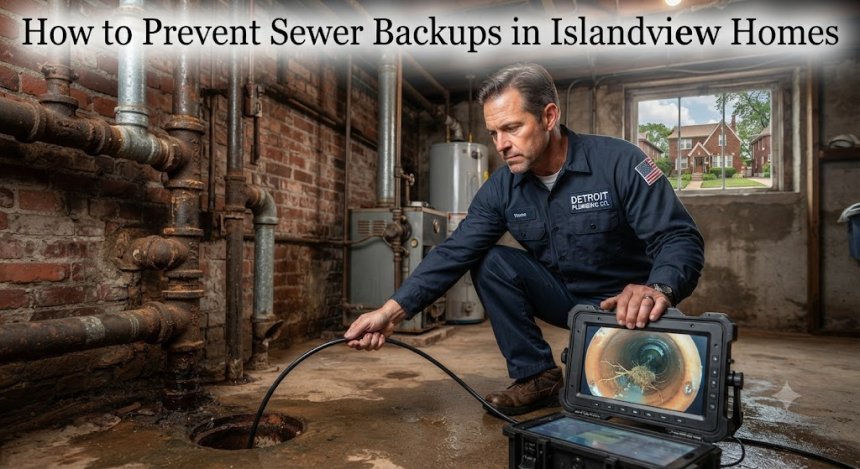
Step 2 Diagnosis: We deploy specialized sewer inspection cameras into your main line. These fiber-optic cameras navigate the pipes, allowing us to visually identify the exact cause of the problem—whether it’s root intrusion, heavy scale buildup, a foreign object, or a structural collapse—and locate its position.
-
Step 3 Estimate: Based on the camera findings, we provide a transparent, upfront cost estimate detailing the necessary work, materials, and time required to resolve the issue or implement prevention.
-
Step 4 Repair: We utilize professional-grade motorized augers to cut through root masses or blockages. If hydro jetting (high-pressure water) is needed to scour pipe walls, we use that. For collapsed or severely damaged pipes, we discuss trenchless repair or traditional excavation options.
-
Step 5 Installation of Prevention: If the primary goal is prevention, we install backwater valves or overhead plumbing systems (see below).
-
Step 6 Cleanup: After clearing a backup, we recommend professional remediation services to thoroughly clean, disinfect, and dry the affected areas to prevent mold growth.
-
Step 7 Maintenance Advice: We provide ongoing maintenance tips to keep your system running smoothly and prevent future issues.
Can You Fix It Yourself?
-
Safe DIY Solutions: You can safely use a plunger for a single, minor toilet clog. You can also use a hand-cranked drain auger (snake) for small sink or tub clogs if you are comfortable doing so. Regular cleaning of hair traps in showers is also helpful.
-
When DIY Becomes Dangerous: Never use chemical drain cleaners (like Drano or Liquid-Plumr) in an attempt to clear a main sewer line backup. These caustic chemicals are ineffective against heavy root intrusion or collapsed pipes and are extremely dangerous for plumbers who may have to work on the line later; they can cause severe skin and eye burns. Attempting to use a large, rental electric drain auger without training can also result in serious injury, as the powerful machine can twist unexpectedly, break bones, or get inextricably stuck inside the pipe.
-
When Professional Plumbing is Necessary: If you experience any of the warning signs listed above (especially multiple slow drains, gurgling sounds, or sewage odors), you require professional diagnostics and repair. A main line backup is never a DIY job.
Tools Professionals Use
Licensed plumbers use advanced equipment to diagnose and clear sewer lines safely and effectively.
-
Sewer Inspection Cameras: High-resolution, waterproof cameras on flexible push-rods that provide a real-time video feed of the pipe's interior.
-
Pipe Locators: Transmitters attached to the camera head that allow plumbers to pinpoint the exact location and depth of the problem from above ground.
-
Professional Motorized Augers (Drain Snakes): Heavy-duty machines with various cutting heads designed to bore through tough root blockages and break apart dense debris.
-
Hydro Jetting Equipment: High-pressure water jetters that use specialized nozzles to blast water at extreme psi, effectively scouring grease, scale, and stubborn roots from cast iron or clay pipe walls without damaging the pipe itself.
-
Trenchless Repair Technology: Equipment used to rehabilitate or replace sewer lines without extensive excavation, such as pipe bursting or cured-in-place pipe (CIPP) lining.
How Long Does the Repair Usually Take?
The duration depends on the severity of the problem and the chosen solution.
-
Clearing a Simple Blockage: Typically takes 1 to 3 hours.
-
Hydro Jetting a Main Line: Usually takes 2 to 4 hours.
-
Installing a Backwater Valve: Generally takes 1 to 2 days, depending on concrete work.
-
Trenchless Sewer Replacement: Can often be completed in 1 to 3 days.
-
Traditional Excavation Replacement: Usually takes 3 to 5 days or longer, depending on depth and site conditions.
Cost Factors
Plumbing repair costs vary depending on the severity of the problem, accessibility, materials required, emergency service, property type, and local labor rates.
-
Diagnostic Fees: Standard service charge for troubleshooting and camera inspection.
-
Accessibility: Digging up a pipe under a finished concrete basement floor is more labor-intensive than accessing one in a crawlspace or unfinished basement.
-
Severity of Blockage: Clearing severe root intrusion or multiple clogs requires more time and specialized equipment.
-
Repair Method: Trenchless repair is often more expensive in materials but less destructive and labor-intensive than traditional digging.
-
Permit Costs: Required by the City of Detroit for any significant plumbing work.
-
Emergency Service Charges: Premium rates apply for after-hours or weekend calls.
Hidden Truths Homeowners Should Know
Understanding the practical realities of plumbing in older Detroit neighborhoods can save you money and stress.
-
Small Leaks Become Expensive Repairs: A minor drip from a corroded pipe under the slab will silently saturate the soil, eventually causing foundation settling and cracking.
-
Cheap Temporary Fixes Often Fail: Chemical cleaners and cheap auger rentals are band-aid solutions that don't address root causes like pipe collapse or heavy scaling.
-
Insurance May Not Cover Neglected Plumbing: Standard homeowner policies usually cover sudden water damage (e.g., a burst supply hose) but often deny claims resulting from long-term, neglected maintenance or gradual pipe corrosion. If your 100-year-old sewer line collapses due to age, you are likely paying for cleanup and replacement out of pocket.
-
Tree Roots are Relentless: If roots breach your lateral line, they will continue to grow back unless the pipe is structurally lined or replaced.
-
DIY Mistakes Increase Repair Costs: Improper use of rental equipment can collapse a weakened pipe or get a cable stuck, turning a simple fix into an expensive emergency excavation.
-
Delaying Repairs Causes Structural Damage: Persistent underground leaks undermine footings and slabs, compromising your home's entire structural integrity.
-
Hidden Leaks Increase Utility Bills: A continuously running toilet or undetected main line leak can add hundreds of dollars to your water bill annually.
-
Mold Develops Quickly: Harmful mold spores can colonize damp basement areas within 24-48 hours of a sewage backup.
-
Annual Maintenance Saves Money: Proactive sewer camera inspections and preventative maintenance can identify weak points in your system before they fail catastrophically.
15 Common Mistakes Homeowners Make
-
Ignoring Slow Drains: Assuming a sluggish sink is "just an old house quirk."
-
Using Chemical Drain Cleaners: Pouring corrosive liquids into aging, corroded pipes accelerates their failure.
-
Flushing "Flushable" Wipes: They do not disintegrate and are the number one cause of modern sewer blockages.
-
Pouring Grease Down Drains: Fats cool and solidify in pipes, acting like concrete.
-
Ignoring Water Pressure Problems: High pressure strains aged pipe joints and valves.
-
Hiring Unlicensed Handymen: Lacking proper credentials and insurance for complex plumbing work.
-
Skipping Annual Maintenance: Waiting for a breakdown instead of scheduling proactive inspections.
-
Waiting Until Emergencies Strike: Delaying calls until sewage is flooding your basement.
-
Using Wrong Pipe Materials: Mixing incompatible materials improperly (e.g., PVC to clay without proper couplings).
-
Over-Tightening Plumbing Fittings: Cracking old valves or snapping brass threads with excessive force.
-
Neglecting Sump Pump Testing: Failing to ensure backup pumps work before spring rains.
-
Using Incorrect Replacement Parts: Forcing generic parts into specialized vintage fixtures.
-
Disregarding Plumbing Codes: Skipping permits and inspections can lead to safety hazards and resale issues.
-
Not Knowing Main Shut-Off Location: Panicking during a flood because no one knows where to stop the water.
-
Skipping Post-Backup Disinfection: Assuming the basement is safe once the water recedes without proper remediation.
Maintenance Tips to Prevent Sewer Backups
-
Install a Backwater Valve: This is the single most effective device. Installed on your main sewer line in the basement, it allows sewage to flow out but features a flap that closes automatically to prevent sewage from flowing back into your house during municipal system surcharges.
-
Replace Aging Sewer Lines: If your camera inspection reveals severe cracking, collapse, or root infiltration in your clay or cast iron lateral, budget for trenchless replacement or lining.
-
Schedule Annual Sewer Camera Inspections: Have a professional plumber inspect your main line every year to monitor its condition and catch root intrusion early.
-
Be Mindful of What You Flush: Follow the "3 Ps Only" rule: pee, poo, and toilet paper. Never flush wipes (even "flushable"), paper towels, feminine products, or dental floss.
-
Dispose of Grease Properly: Never pour cooking fats or oils down the drain. Let them cool, solidify, and dispose of them in the trash.
-
Use Drain Strainers: Place screens over all shower, tub, and sink drains to catch hair and soap scum. Clean them regularly.
-
Maintain Landscaping: Be cautious about planting trees or large shrubs with aggressive root systems near your sewer lateral line. Consult a landscaping professional before planting.
-
Root Treatment: If you have a history of root intrusion, ask your plumber about routine chemical treatments (like RootX) designed to kill roots within the pipe without harming the tree or the plumbing.
-
Consider Overhead Plumbing: In extreme cases of frequent basement backups, the best solution is to install an ejector pump system. This involves capping basement drains and rerouting all lower-level plumbing to a pump that lifts wastewater up to discharge into the main sewer line at a higher point, making basement backups physically impossible.
-
Test Sump Pumps Regularly: If you rely on a sump pump for groundwater, test it before heavy rain seasons by pouring water into the pit to ensure it activates and evacuates water effectively. Consider a battery backup system.
-
Keep Gutters Clear: Ensure downspouts direct water away from your home's foundation to reduce groundwater pressure on basement walls and slab.
-
Address Drips Promptly: Fix minor dripping faucets and running toilets to reduce the daily volume of water flowing through your aged system.
When Should You Call an Emergency Plumber in Islandview?
-
Sewage Backup: Visible raw sewage or greywater backing up into your basement floor drain, tubs, or lower-level toilets requires immediate attention.
-
Total Drainage Failure: When every drain in the house is clogged and water will not exit through any fixture.
-
Toilets Bubbling When Other Fixtures Run: A definitive sign of a main sewer line blockage.
-
Foul Gas Odors: Strong, persistent sewer smells permeating the home indicate a significant break or dry trap in the venting system.
-
Rapidly Flooding Basement During Rain: If you suspect your main sewer line has failed or become overwhelmed.
Why Choose Our Plumbing Company
-
Experienced Licensed Plumbers: Our team brings decades of specialized expertise resolving complex plumbing challenges in historic Detroit properties.
-
Honest Recommendations: We provide transparent, straightforward guidance focused solely on what your home genuinely needs to be safe and functional.
-
Upfront Estimates: You receive clear, detailed pricing before any work begins with zero hidden surprises.
-
Fast Response: We offer prompt dispatch across Detroit, including Islandview and surrounding areas, to resolve your emergencies quickly.
-
Emergency Availability: Our professionals stand ready around the clock when urgent plumbing crises strike.
-
Quality Workmanship: We adhere to strict industry standards to ensure lasting, code-compliant repairs.
-
Modern Equipment: We utilize advanced diagnostic tools like fiber-optic sewer cameras and hydro jetters for maximum precision.
-
Customer Satisfaction: Our reputation across Detroit reflects our unwavering dedication to reliable, trustworthy service.
-
Local Expertise: We intimately understand the unique plumbing quirks, aging infrastructure, and architectural nuances of historic Detroit homes.