Low Water Pressure in Lafayette Park Condos: Causes
Experiencing low water pressure in your Lafayette Park condo? Learn common causes, from aging pipes to building issues, and when to call a Detroit plumber.

NEED A PLUMBER?
Fast & Local Plumbing Services
Leaks • Clogged Drains • Burst Pipes • Water Heaters • Emergency Plumbing
NEED A PLUMBER?
Fast & Local Plumbing Services
Leaks • Clogged Drains • Burst Pipes • Water Heaters • Emergency Plumbing
Low Water Pressure in Lafayette Park Condos: Common Causes Explained
Living in the historic and architecturally significant Lafayette Park neighborhood offers a unique blend of urban convenience and mid-century charm. However, many residents in this iconic Detroit community reside in aging high-rise condominiums and townhouses. A frequent frustration for homeowners and property managers alike is dealing with chronic or sudden low water pressure. That weak stream in the shower or sluggish kitchen faucet isn't just annoying—it can indicate underlying plumbing issues that, if ignored, lead to bigger problems. Understanding why water pressure drops in your Lafayette Park condo is the first step toward restoring full flow and protecting your home.
What Is Low Water Pressure?
Low water pressure is defined as a noticeable decrease in the flow rate and force of water coming from your faucets, showerheads, or appliances.
In a typical Detroit condo setting, this manifests in several ways. You might turn on the kitchen sink and get a mere trickle, or find that your washing machine takes twice as long to fill. In severe cases, running the dishwasher while someone is showering can reduce the shower flow to an unsatisfying drizzle. It’s important to differentiate between low pressure (the force) and low flow (the volume), although they often feel the same to the user. While sometimes a building-wide issue affecting all units in a high-rise, often the problem is isolated to your specific condo.
Why Does This Plumbing Problem Happen in Lafayette Park?
Water pressure issues in older urban environments like Detroit are common due to aging infrastructure, but condo living adds another layer of complexity.
-
Aging Galvanized Pipes: Many mid-century buildings in Lafayette Park were originally plumbed with galvanized steel pipes. Over decades, these pipes corrode internally, leading to significant mineral buildup (scale) that narrows the interior diameter, strangling water flow before it reaches your faucet. This is a primary cause of chronic, worsening low pressure in older units.
-
Clogged Plumbing Fixtures: Sometimes, the problem is right at the source. Aerators on faucets and showerhead nozzles trap sediment, mineral deposits from Detroit’s water supply, and small pieces of pipe debris over time. This is a very common and easily fixable cause of pressure loss in specific fixtures.
-
Issues with the Pressure Reducing Valve (PRV): Most condo buildings and many individual units utilize a PRV to ensure the municipal water pressure entering the system isn't too high, which can damage pipes and appliances. If a PRV fails or becomes misadjusted, it can dramatically restrict water pressure to your condo.
-
Partially Closed Valves: Water supply valves can sometimes be bumped or left partially closed after maintenance. Check the main shut-off valve for your unit (often near the water heater or where lines enter the condo) and the individual valves under sinks to ensure they are fully open.
-
Peak Demand Times: In older high-rise buildings, significant pressure drops can occur during peak usage times—typically mornings (7-9 AM) and evenings (6-8 PM)—when many residents are showering, running dishwashing units, and doing laundry simultaneously. The building’s supply system may struggle to meet high demand.
Signs You Should Never Ignore Associated with Low Pressure
A minor drop in pressure might seem like a quirk of living in an older building, but it often serves as a warning sign.
-
Discolored Water: Brown, yellow, or reddish water often indicates rust and heavy corrosion inside aging galvanized pipes. This signals severe pipe degradation and potential leaks.
-
Water Stains: Unexplained stains on ceilings, walls, or floors below plumbing areas can indicate hidden pipe leaks that depressurize the system.
-
Mold Growth: Persistent dampness behind walls fueled by small, undetected leaks encourages rapid mold growth.
-
Strange Noises: Banging pipes (water hammer) or hissing sounds often accompany pressure regulation problems or failing pipe supports within older structures.
-
Foul Smells: Musty or sewage odors near drains can point to venting issues or backups exacerbated by poor drainage flow.
Common Plumbing Problems Related to Low Water Pressure
Low pressure is rarely an isolated incident in an aging plumbing system; it’s frequently tied to other issues.
-
Pipe Leaks: When pipes are corroded or excessively pressurized, pinhole leaks and major bursts are more likely, which in turn causes noticeable pressure drops.
-
Drain Clogs: Slow drains and low pressure at a fixture often combine to create a frustrating, unusable sink or tub.
-
Fixture Damage: Struggling, sputtering faucets and showerheads wear out faster, leading to premature failure and replacement needs.
-
Water Heater Sediment Buildup: Heavy mineral scale accumulation in the bottom of an aging water heater tank can restrict hot water flow out of the unit, resulting in lower hot water pressure specifically.
Step-by-Step Professional Repair Process
When a licensed Detroit plumber is called to diagnose chronic low water pressure in a Lafayette Park condo, they follow a systematic approach.
-
Step 1 Inspection: The plumber first identifies whether the issue affects only hot water, only cold water, or both at various fixtures throughout the unit.
-
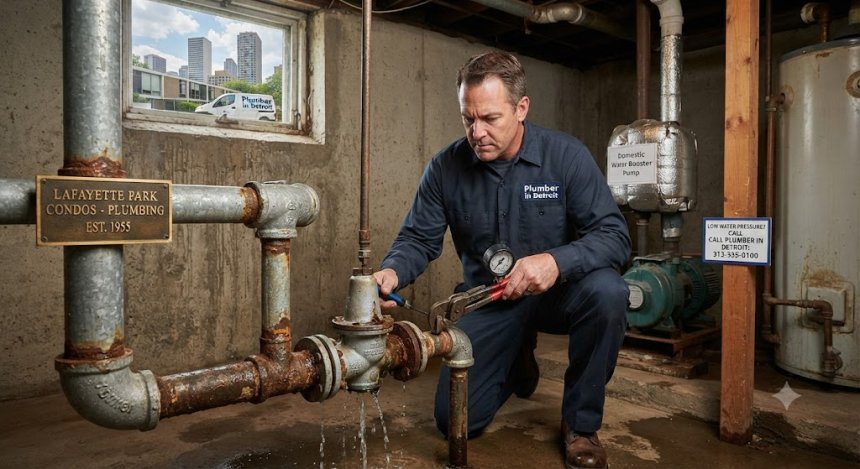
Step 2 Diagnosis: They check the main shut-off valve, clean fixture aerators, test the unit’s Pressure Reducing Valve (PRV) with a gauge, and assess the age and material of accessible piping.
-
Step 3 Estimate: You receive a detailed, upfront cost estimate outlining the recommended repair, necessary parts, and labor required to fix the specific issue.
-
Step 4 Repair: Once approved, the plumber executes the repair—whether it’s cleaning sediment, replacing a faulty PRV, installing a new shut-off valve, or performing targeted pipe replacement.
-
Step 5 Testing: The system is thoroughly tested under full operating pressure to ensure the flow is restored to optimal levels and all new components are functioning correctly.
-
Step 6 Cleanup: The work area is left clean and tidy, with all old parts and debris removed from your property.
-
Step 7 Maintenance Advice: The technician provides valuable tips on maintaining water pressure and preventing future clogs or corrosion issues in your condo.
Can You Fix It Yourself?
Some causes of low water pressure are simple enough for a handy homeowner to address.
-
Safe DIY Solutions: You can safely unscrew faucet aerators and showerheads, soak them in white vinegar overnight to dissolve mineral scale, and scrub them clean before reinstalling. Check all accessible water supply valves to ensure they are fully open.
-
When DIY Becomes Dangerous: Attempting to adjust or replace a main building shut-off valve or the main Pressure Reducing Valve (PRV) for your unit can lead to catastrophic pipe failure and flooding if you lack proper expertise and tools.
-
When Professional Plumbing is Necessary: If cleaning aerators and checking valves doesn't resolve the issue, or if you suspect aging galvanized pipes are the culprit, you require professional diagnostics and repiping services.
Tools Professionals Use
Licensed plumbers rely on specialized equipment to quickly and accurately pinpoint the source of pressure loss.
-
Pressure Testing Gauges: Used to measure the actual water pressure (psi) entering your condo, verifying if it falls below standard municipal requirements.
-
Drain Cameras: Fiber-optic cameras are sometimes used to inspect the interior of accessible pipes for severe corrosion or hidden obstructions.
-
Pipe Locators: Electromagnetic devices used to trace the path and depth of concealed piping within condo walls and floors.
How Long Does the Repair Usually Take?
The duration of repairs depends entirely on the root cause.
-
Simple Repairs: Cleaning multiple faucet aerators throughout a condo typically takes 1 to 2 hours.
-
Moderate Repairs: Replacing a faulty Pressure Reducing Valve (PRV) usually takes 2 to 3 hours.
-
Major Repairs: While replacing accessible supply lines within a single unit might take a full day, extensive repiping of an older condo can span several days, requiring coordination with building management.
Cost Factors
Plumbing repair costs vary depending on the severity of the problem, accessibility, materials required, emergency service, property type, and local labor rates.
-
Diagnostic Fees: Standard trip and troubleshooting charges to evaluate the system.
-
Parts: Costs for components like a new PRV, quality shut-off valves, or new plumbing fixtures.
-
Labor: Based on the complexity of the job and time required by licensed Detroit plumbers.
-
Emergency Service Charges: Premium rates applied for after-hours or weekend dispatch calls to address sudden, severe issues.
-
Replacement vs. Repair: While cleaning an aerator is inexpensive, replacing corroded galvanized pipes is a significant investment.
Hidden Truths Homeowners Should Know
Living in a historic Detroit neighborhood comes with specific realities.
-
Small Leaks Become Expensive Repairs: Ignoring a small pressure drop often means ignoring a slow leak that is rotting framing and subflooring.
-
Cheap Temporary Fixes Often Fail: Using sealants or patches on corroded old pipes is a temporary band-aid that will inevitably burst under pressure.
-
Insurance May Not Cover Neglected Plumbing: Homeowners' insurance policies frequently deny claims for water damage caused by old, unmaintained pipes that finally fail.
-
Galvanized Pipes Have a Lifespan: If your condo was built in the 1950s or 60s and still has original galvanized pipes, they are likely failing internally, regardless of how the pressure feels.
-
DIY Mistakes Increase Repair Costs: Incorrectly attempting to fix a main valve can snap aging pipes, turning a minor pressure issue into a major flood emergency.
15 Common Mistakes Homeowners Make
-
Ignoring Slow Leaks: Assuming a small drip is harmless leads to significant water damage and mold growth.
-
Using Chemical Drain Cleaners: These corrosive liquids damage older pipes and fixtures, exacerbating existing clogs and accelerating corrosion.
-
Flushing Wipes: Even "flushable" wipes snag on rough pipe joints, causing severe blockages in aging condo waste lines.
-
Pouring Grease Down Drains: Congealed fats trap debris and choke kitchen sink traps.
-
Ignoring Water Pressure Problems: Hoping low pressure will magically resolve itself allows underlying pipe degradation to worsen.
-
Hiring Unlicensed Plumbers: Unqualified handymen often lack insurance and building code knowledge, creating liability risks.
-
Skipping Annual Maintenance: Failing to have a plumber inspect systems yearly leads to sudden, costly failures.
-
Waiting Until Emergencies: Postponing repairs results in midnight plumbing disasters that disrupt your life.
-
Using Wrong Pipe Materials: Mixing incompatible metals (like connecting copper directly to galvanized steel) causes rapid galvanic corrosion and leaks.
-
Over-Tightening Plumbing Fittings: Cracking old valves or snapping brass threads with excessive torque creates new leaks.
-
Forgetting to Shut Off Main Water: Attempting plumbing work without isolating the supply floods your home instantly.
-
Neglecting Aerator Cleaning: Allowing mineral scale to block screens creates erratic spray patterns and apparent pressure loss.
-
Using Incorrect Replacement Parts: Forcing generic aftermarket parts into specialized vintage fixtures ruins housings.
-
Disregarding Local Building Codes: Failing to meet municipal plumbing standards during DIY upgrades causes future headaches and resale issues.
-
Skipping Post-Repair Checks: Turning water back on and walking away without inspecting for slow seeps.
Maintenance Tips for Water Pressure
-
Clean Aerators Biannually: Unscrew and soak all faucet aerators and showerheads in vinegar every six months to remove sediment buildup.
-
Check for Hidden Leaks: Routinely inspect under sinks, around water heaters, and behind appliances for any signs of dampness or staining.
-
Exercise Main Shut-Off Valve: Turn your condo’s main water shut-off valve off and on fully once or twice a year to ensure it doesn't seize up.
-
Schedule Annual Inspections: Have a licensed local plumber evaluate your condo’s entire plumbing system annually to catch potential issues before they become emergencies.
-
Monitor Water Pressure: Consider installing a permanent water pressure gauge in your utility area to keep an eye on incoming psi levels.
When Should You Call an Emergency Plumber in Lafayette Park?
-
Burst Pipes: Sudden line failures spraying water require immediate main shut-off and professional intervention.
-
No Running Water: Complete sudden loss of water points to main service failures or frozen lines affecting your unit.
-
Major Water Leaks: Uncontrolled flooding from broken supply lines demands urgent professional mitigation.
-
Sewage Backup: Raw sewage backing up into your shower or tubs creates immediate health hazards.
-
Foul Gas Odors: Heavy sewer gas smells entering living spaces pose safety and health risks.
Frequently Asked Questions
-
Why is my water pressure suddenly low? Sudden drops usually indicate a major pipe break, a failed Pressure Reducing Valve (PRV), or a temporary issue with the municipal supply.
-
How much does leak detection cost? Professional leak detection pricing varies based on equipment deployment, condo size, and whether lines are hidden behind walls or concrete.
-
Can a clogged drain damage pipes? Yes, persistent hydrostatic pressure and corrosive organic buildup can crack aged pipe joints over time.
-
Is hydro jetting safe for old pipes? Hydro jetting requires an initial camera inspection; extremely fragile or degraded vintage pipes may require gentler alternative cleaning methods.
-
How do I know if my sewer line is broken? Multiple slow drains, recurring basement backups, and foul sewage odors indicate a compromised lateral line.
-
How long do water heaters last? Standard tank water heaters generally last between 8 to 12 years based on maintenance and water quality.
-
Why does my faucet drip? Internal rubber washers, O-rings, or worn valve seats degrade from daily friction and mineral exposure.
-
What causes pipes to burst? Severe winter freezing causes trapped water to expand inside pipe walls, resulting in catastrophic ruptures.
-
Can plumbing leaks increase my water bill? Even a minor, continuous leak wastes thousands of gallons annually, driving up utility expenses.
-
When should I replace plumbing instead of repairing it? If a building suffers from widespread pipe corrosion, frequent repeat leaks, or failing historic materials, a complete repipe is the safest long-term choice.
Why Choose Our Plumbing Company
-
Experienced Licensed Plumbers: Our team brings decades of specialized expertise resolving complex plumbing challenges in historic Detroit properties and condo high-rises.
-
Honest Recommendations: We provide transparent, straightforward guidance focused solely on the actual needs of your home or business.
-
Upfront Estimates: You receive clear, detailed pricing before any work begins with zero hidden surprises.
-
Fast Response: We offer prompt dispatch to minimize disruption to your daily life in Lafayette Park.
-
Emergency Availability: Our professionals stand ready around the clock when urgent plumbing crises strike.
-
Quality Workmanship: We adhere to strict industry standards to ensure lasting, code-compliant repairs.
-
Modern Equipment: We utilize advanced diagnostic tools like thermal cameras and pipe locators for pin-point accuracy.
-
Customer Satisfaction: Our reputation across Lafayette Park, Midtown, and greater Detroit reflects our dedication to reliable service.
-
Local Expertise: We intimately understand the unique plumbing quirks, aging infrastructure, and high-rise challenges of historic Detroit architecture.