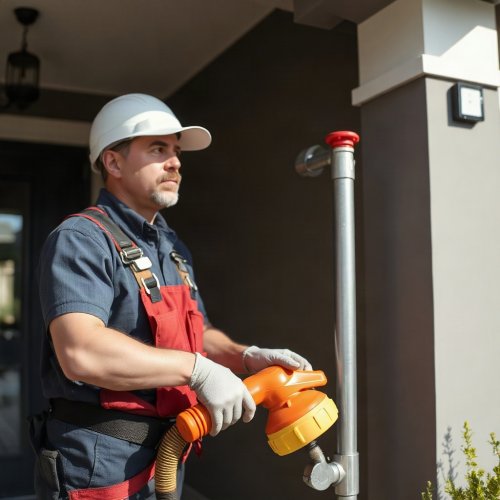
Why Detroit Sump Pumps Fail During Heavy Rains: Causes & Fixes
Discover the leading causes of sump pump failure during heavy Detroit rainstorms and learn how to protect your basement from flooding.


NEED A PLUMBER?
Fast & Local Plumbing Services
Leaks • Clogged Drains • Burst Pipes • Water Heaters • Emergency Plumbing
NEED A PLUMBER?
Fast & Local Plumbing Services
Leaks • Clogged Drains • Burst Pipes • Water Heaters • Emergency Plumbing
Understanding Detroit Heavy Rains and Sump Pump Stress
When severe weather hits Southeast Michigan, basement waterproofing systems are put to the ultimate test. Detroit's unique regional weather patterns—ranging from torrential spring downpours to rapid snowmelt and heavy summer thunderstorms—place an immense workload on residential and commercial sump pumps. As local groundwater tables rise rapidly, a functional sump pump is your primary defense against costly basement flooding.
However, many property owners only discover their drainage system is compromised when water begins pooling across the basement floor during a major storm. As an experienced plumber working throughout Detroit, I have responded to countless emergency calls where preventable equipment breakdowns left basements underwater. Recognizing why these systems fail during peak storm events is the first step toward safeguarding your property.
1. Overwhelmed Pump Capacity Due to Excessive Inflow
One of the most frequent issues during major Detroit storms is sheer volume overload. When rainfall is exceptionally heavy, the rate at which water enters the sump pit can outpace the pumping capacity of the unit installed.
- Power Ratings: A standard 1/3-horsepower pump may handle normal seepage, but severe storms often require a 1/2-horsepower unit or larger.
- Basement Size and Water Table: Properties located in low-lying Detroit neighborhoods or areas with high clay content in the soil experience rapid saturation, directing massive volumes of water toward the foundation perimeter drain tile.
If your pump runs continuously without lowering the water level in the pit, the unit may simply be underpowered for severe weather demands.
2. Mechanical Switch Jams and Float Obstructions
The switch mechanism controls when your pump turns on and off. In a busy sump pit, debris, mineral buildup, or shifting components can interfere with this critical moving part.
Float switches can get stuck against the side of the plastic liner, tangled with debris washed in from the perimeter drains, or wedged against a discharge pipe. When a float switch remains stuck in the down position, the motor will not engage even as water spills over the top of the pit. Conversely, if it gets stuck in the up position, the motor will run dry continuously, leading to premature burnout.
3. Electrical Power Interruptions
Severe thunderstorms in Metro Detroit frequently bring high winds and lightning that knock out power grids. Because electric sump pumps rely entirely on household current, a blackout instantly neutralizes your primary flood defense.
Property owners often realize too late that their system lacks a secondary power source. Relying solely on grid power during a major rainstorm leaves your basement entirely vulnerable the moment lightning strikes a local transformer.
4. Discharge Line Blockages and Freezing or Clogging
Water must not only be lifted out of the pit; it must be safely transported far away from your foundation. Problems along the exterior discharge route frequently cause water to back up directly into the basement.
- Debris and Mud: Leaves, dirt, and animal nests can obstruct exterior exit points.
- Improper Slope: If the discharge line lacks adequate downward pitch, water can pool and create a blockage.
- Frozen Outlets: While more common during winter thaws or early spring storms, a partially obstructed discharge line reduces overall flow rate, forcing the pump to work harder against backpressure.
- Test the System Quarterly: Pour a 5-gallon bucket of water directly into the sump pit to ensure the float switch activates the motor smoothly and water is expelled rapidly.
- Clean the Pit: Clear out silt, gravel, and debris that accumulates at the bottom of the basin, as this sediment can clog the intake screen.
- Inspect Check Valves: Ensure the check valve—which prevents discharged water from flowing back down into the pit—is installed in the correct direction and functioning properly.
- Consider a Battery Backup System: Installing a secondary battery-powered backup pump provides essential protection during power outages and heavy storms.
5. Pump Motor Burnout from Age and Wear
Sump pumps have a finite mechanical lifespan, typically ranging from 7 to 10 years. Constant cycling during heavy seasonal rains accelerates wear on bearings, impellers, and internal windings.
An aging motor may hum loudly, trip your circuit breaker, or fail to spin the impeller effectively. If your pump is approaching a decade of service, heavy storm conditions will likely push worn components past their breaking point.
Practical Maintenance Strategies for Detroit Homeowners
Preventing a basement flood requires proactive inspection and testing before severe weather arrives:
Frequently Asked Questions
How often should a sump pump be replaced in a Detroit home?
Most residential sump pumps last between 7 and 10 years. If your unit is older than 8 years, shows signs of rust, or struggles during moderate rainstorms, replacing it proactively before storm season is strongly recommended.
Why does my sump pump run constantly even after the rain stops?
If the pump continues running continuously, the float switch may be stuck in the "on" position, the check valve may be failing and causing water to cycle endlessly through the same loop, or groundwater table pressure remains exceptionally high around your foundation.
Can I rely on an extension cord to power my sump pump during a storm?
No. Extension cords can create electrical hazards in damp basement environments, frequently lack the proper gauge for heavy motor loads, and can easily become disconnected during emergency situations. Always plug the pump directly into a GFCI outlet or dedicated backup circuit.